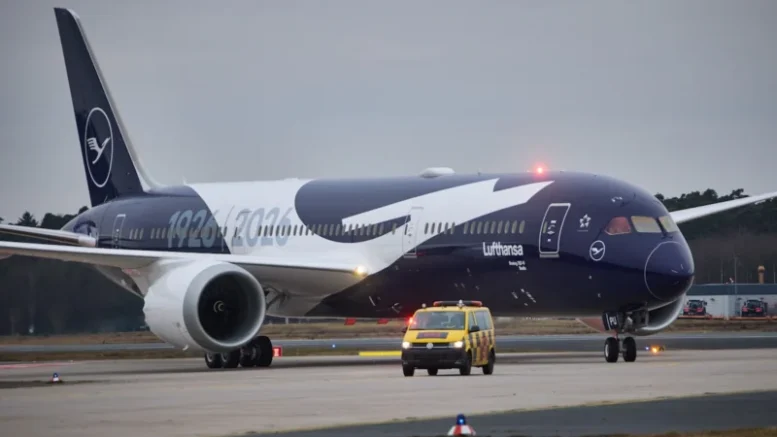
AviationNews – The Lufthansa Group has significantly downgraded its full-year financial outlook for 2026 following a sharp 56 percent drop in second-quarter operating profit. This sudden downturn highlights the severe financial impact of mounting jet fuel expenses and the costly aftermath of recent labor strikes across the European aviation sector.
On Tuesday, August 4, the German aviation giant revealed that its adjusted earnings before interest and taxes (EBIT) fell to €383 million in the second quarter, down from €870 million during the same period last year. The airline group, which encompasses Lufthansa, Swiss, Austrian Airlines, and ITA Airways, subsequently lowered its projected 2026 adjusted EBIT to a range between €1.7 billion and €2.2 billion. Previously, the carrier anticipated earnings to comfortably exceed the €1.96 billion recorded in the previous year.
The financial strain stems from a complex operational environment heavily influenced by external pressures. Skyrocketing jet fuel prices, exacerbated by ongoing geopolitical conflicts, added roughly €750 million in year-over-year operational costs. Additionally, a series of labor strikes in April led to widespread disruptions, reducing overall network capacity by 3 percent and adding at least €150 million in direct costs. To mitigate these massive financial headwinds, Lufthansa is increasing ticket prices, optimizing its short-haul network, and temporarily grounding less efficient aircraft.
“Today, we reflect on a challenging second quarter that was once again marked by multiple geopolitical crises and uncertainties,” stated Lufthansa Group Chief Executive Officer Carsten Spohr. “Despite our further improvement in load factor and a significant increase in yield, we were unable to fully offset the considerable rise in fuel costs.”
Moving forward, Lufthansa aims to accelerate a broader turnaround program designed to modernize its fleet and optimize internal operations to reduce costs. The company maintains a cautiously optimistic stance for the second half of the year, expecting persistently high passenger demand in premium cabins and on long-haul routes to counterbalance some of the financial turbulence. Investors and travelers alike should monitor how the airline navigates volatile booking cycles and implements potential adjustments to flight availability in the coming months.
Lufthansa’s latest financial revision underscores the delicate balancing act legacy carriers face when managing unpredictable operational expenses. While robust passenger demand provides a solid revenue foundation, the ongoing volatility of fuel markets remains a critical threat to margins. The aviation industry will watch closely to see if strategic capacity cuts and fleet modernizations can restore the group’s long-term profitability.