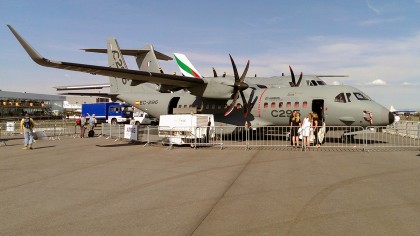
AviationNews – Airbus increases production of the C295 transport aircraft to successfully meet a rising global demand for tactical airlift capacity. To ensure timely deliveries for international military clients, the aerospace manufacturer has decided to significantly increase the production rate of the C295, elevating its annual output from 10 to 13 units at its primary assembly facility in Seville, Spain.
The strategic decision to accelerate operations at the San Pablo final assembly line follows a sustained influx of international orders. With 335 total aircraft ordered globally to date, nations such as Spain, India, and Thailand are actively modernizing their aging aviation fleets. Spain recently accepted its first C295 dedicated to maritime search and rescue—part of a massive 34-unit national procurement program—while a groundbreaking 56-aircraft order for the Indian Air Force includes a new domestic manufacturing partnership with Tata Advanced Systems in Vadodara.
Renowned for its ruggedness and reliability, the twin-turboprop C295 operates effectively from short, unpaved airstrips while moving heavy troops, cargo, and humanitarian aid. Beyond standard logistics, the aircraft now features an advanced digital mission architecture, enabling it to conduct complex maritime patrol, anti-submarine warfare, and intelligence-gathering operations. This multi-mission adaptability provides smaller air forces and coast guards with an affordable, persistent surveillance tool compared to operating larger, more expensive maritime patrol airframes.
“The C295 is the undisputed global leader in its segment, and our production ramp-up reflects the resilient demand for versatile, medium tactical airlift and special-mission platforms,” noted an Airbus Defence and Space industry report regarding the manufacturing expansion.
Moving forward, this manufacturing boost signals a long-term industry reliance on highly adaptable, cost-effective military aircraft over strictly single-purpose planes. However, Airbus faces the ongoing challenge of managing a complex global supply chain to sustain this accelerated delivery schedule without bottlenecking subsystem components. Defense ministries and border security agencies globally are encouraged to assess their procurement needs and secure their production slots early as international competition for versatile airlifters intensifies.
Ultimately, the accelerated production of the C295 solidifies Airbus’s dominant 85 percent market share in the medium tactical transport category. As manufacturing successfully scales up in both Europe and Asia, the aircraft program is firmly positioned to serve as the reliable backbone for international military transport and specialized missions well into the next two decades.