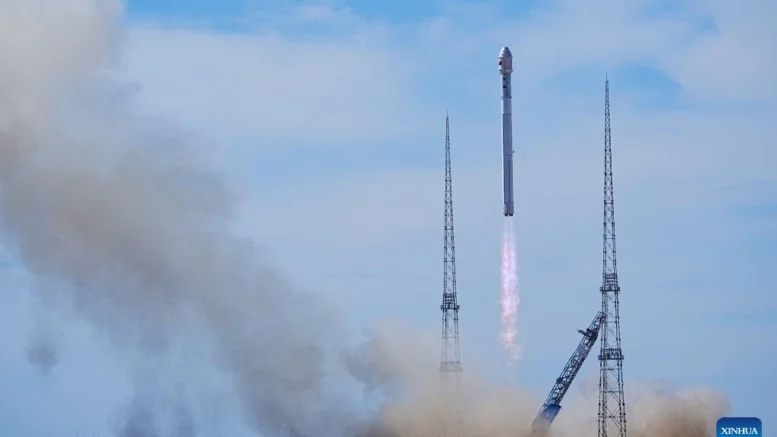
Aviation News – China successfully launched a Zhuque-2E Y7 carrier rocket on Tuesday afternoon, delivering 10 networking satellites into orbit for a expanding mega-constellation.
The commercial space launch took place at 2:26 p.m. Beijing Time from the Dongfeng commercial space innovation pilot zone in northwest China. Mission commanders declared the flight test mission a complete success after the vehicle released all ten payloads directly into their target orbits. Private launch operator LandSpace developed the medium-class carrier rocket series to service growing global demand for orbital deployment.
The mission marks an important operational milestone for China’s expanding commercial aerospace industry. By successfully deploying a multi-satellite batch, the Zhuque-2E program validates its capacity to handle large-scale payload integration and orbital transport. The new satellite constellation will expand global data transmission and orbital communication networks.
The Zhuque-2E rocket utilizes liquid oxygen and methane propellant to achieve efficient, cost-effective orbital insertion. This propulsion technology provides precise guidance and multi-payload separation capabilities necessary to stack and release ten networking satellites in a single launch pass.
“The successful orbital deployment of ten satellites demonstrates the reliability of our commercial launch vehicle platform,” stated a LandSpace flight director following the mission. “This operational achievement strengthens our ability to support rapid construction of major orbital constellations.”
The successful mission accelerates the development of commercial space infrastructure across Asia. Continued launch successes will increase routine flight cadence and reduce payload costs for high-density satellite constellations.
The Zhuque-2E Y7 mission establishes a strong operational benchmark for commercial methane-fueled launch vehicles. The successful deployment of 10 networking satellites ensures momentum for upcoming orbital infrastructure projects. Future launch schedules will continue expanding network capacity for global communications.