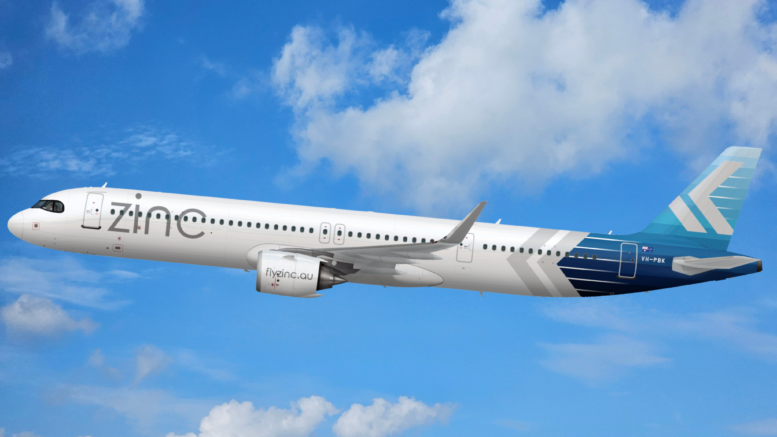
Aviation News – Zinc Airlines announced a significant revision to its operational roadmap, moving away from larger Airbus A321neo aircraft in favor of the smaller Airbus A320ceo model. The upcoming Australian budget carrier chose to alter its procurement plans after confronting severe aircraft availability issues in a highly congested global market.
The strategic pivot arrives during a critical fundraising window where the startup continues to attract strong early investor interest. Navigating a highly competitive Australian aviation market dominated by long-standing incumbents requires rapid fleet mobilization, prompting leadership to reprioritize asset acquisition speed over ultimate cabin capacity.
By stepping back from the backlogged A321neo pipeline, the start-up aims to secure immediate delivery timelines from alternative leasing channels. This development modifies the carrier’s original blueprint to launch an ultra-low-cost platform out of Western Sydney International Airport, shifting focus to more accessible aircraft generations.
Operating the A320ceo offers distinct technical and logistical advantages, providing lower initial capital costs and immediate spare parts availability compared to newer engine variants. Although the classic generation aircraft sacrifices some fuel efficiency over long stages, the smaller cabin capacity allows Zinc Airlines to optimize passenger load factors much faster across its initial high-frequency domestic routes.
“Adjusting our fleet selection ensures we can bypass current manufacturing bottlenecks and hit our targeted launch window without compromising our low-fare business model,” stated a Zinc Airlines strategy representative regarding the fleet amendment.
Looking ahead, this hardware transition positions the budget carrier to secure its necessary Air Operator’s Certificate on an accelerated timeline. Industry analysts and potential passengers must now monitor how effectively the company scales its operational infrastructure using the classic-generation airframes.
The modified fleet plan highlights the intense supply-chain pressures currently dictating modern airline launch strategies. By prioritizing immediate aircraft delivery over future-generation technology, the start-up secures a realistic path toward breaking the local aviation duopoly. Success will ultimately depend on whether the lower ownership costs of the A320ceo can offset higher fuel expenses in a ruthless economic environment.


