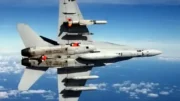
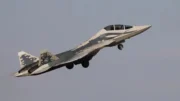
Aviation News – The United Aircraft Corporation has manufactured and officially delivered a new batch of Sukhoi Su-30SM2 multirole fighters and Su-34 fighter-bombers to the Russian Ministry of Defense. This tactical reinforcement aims to replace combat attrition and modernize the country’s frontline aviation capabilities amid ongoing regional conflicts.
The handover, completed in July 2026, marks a critical milestone in the execution of Russia’s state defense procurement program. State-owned industrial conglomerate Rostec, via its subsidiary UAC, orchestrated the complex production across specialized regional facilities, including the Irkutsk Aviation Plant and the Novosibirsk Aircraft Plant. This defense order guarantees a continuous supply of heavy tactical aircraft to sustain high-intensity aerial operations.
Before their final deployment, each newly built airframe successfully completed an extensive, mandatory cycle of internal ground and flight factory tests. Military acceptance crews took formal ownership at the manufacturing sites before ferrying the combat jets directly to their permanent operational airbases.
On a technical level, the Su-30SM2 provides enhanced air superiority through upgraded avionics and a powerful radar that extends tracking ranges, allowing it to engage targets without entering opposing air defense zones. Concurrently, the Su-34 strike platform utilizes its side-by-side two-seat cockpit and heavy payload capacity to deploy precision-guided glide bombs, hitting fortified enemy infrastructure from significant standoff distances.
“UAC production facilities are producing and delivering equipment under the state defense order on schedule and in a rhythmic manner,” stated Vadim Badekha, Chief Executive Officer of the United Aircraft Corporation. “Along with these deliveries, we are working to further improve our aircraft, including by incorporating the experience gained during active operations.”
Moving forward, the steady injection of these modernized platforms ensures that Russian air wings retain a highly versatile operational edge. Industrial output indicators suggest that manufacturing plants are already pivoting toward upcoming procurement quotas to maintain fleet numbers over the next year. Military planners will continue integrating these systems to execute complex, long-range reconnaissance and bombardment strategies across active combat sectors.
The successful delivery of these aircraft highlights Russia’s capacity to maintain localized defense manufacturing despite stringent global supply pressures. Observers note that the immediate deployment of these airframes emphasizes an urgent operational need to regenerate front-line assets. Ultimately, the arrival of these advanced fighters ensures the continuation of heavy aerial bombardment tactics for the foreseeable future.