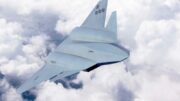
Aviation News – Sukhoi is developing a two-seat aircraft designed to provide advanced flight training while also operating as an airborne command center for autonomous drones. The concept is intended to support future sixth-generation air combat and the integration of artificial intelligence into military aviation.
The aircraft has two primary roles. It will allow pilots to gain practical experience in flight scenarios that cannot be fully reproduced by ground-based simulators, while the second cockpit will provide space for controlling and coordinating autonomous systems during flight.
According to Mikhail Strelets, head of the Sukhoi Design Bureau, the second cockpit represents an important element of the move toward sixth-generation aviation. The configuration could allow the aircraft to act as a flying headquarters, coordinating systems such as the S-70 Okhotnik unmanned combat aircraft and potentially larger drone swarms. Rostec has also said the aircraft will support testing of emerging AI-enabled combat technologies developed by the United Aircraft Corporation.
Operationally, the second crew member could manage autonomous aircraft and other unmanned systems while the main pilot concentrates on the primary combat mission. This division of responsibilities could reduce the workload on the pilot and allow future aircraft to operate as airborne nodes within a network of manned and unmanned platforms.
Strelets described the second cockpit as a “cornerstone of sixth-generation aviation”, highlighting its potential role in integrating advanced autonomous systems with manned aircraft. The approach reflects the growing emphasis on combining human decision-making with increasingly capable AI-controlled platforms.
The concept points toward a future in which combat aircraft could operate as airborne command centers, directing multiple autonomous systems rather than performing missions alone. Further development and testing will determine how effectively the platform can integrate AI, autonomous drones and human operators into a single combat network.
The proposed aircraft illustrates the changing role of the fighter pilot in future air warfare. By combining a two-seat configuration, autonomous drone control and AI technology, Sukhoi is exploring a concept in which manned aircraft become central coordinators of increasingly autonomous combat forces.