Aviation News – Philippin Airlines is preparing a multi-billion dollar fleet expansion by splitting a massive order for 24 next-generation widebody jets between rival manufacturers Boeing and Airbus. Industry sources revealed on Friday that the carrier intends to finalize the deal later this month during the highly anticipated Farnborough Airshow.
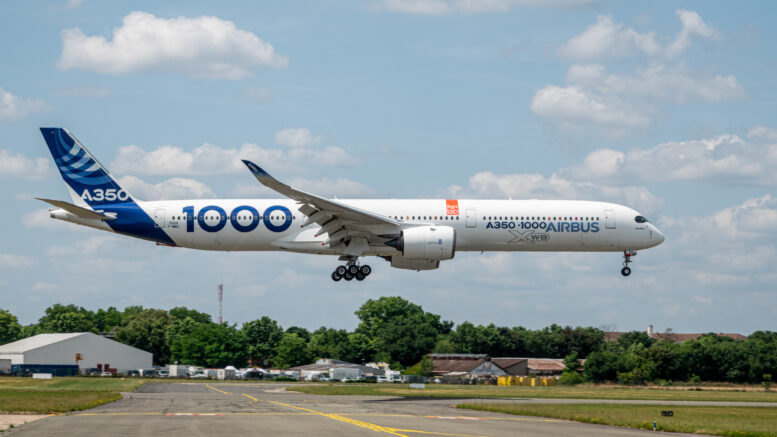
The landmark acquisition marks the flag carrier’s first direct commercial transaction with Boeing in nearly two decades. According to insider reports, the airline plans to purchase 15 Boeing 787-10 aircraft alongside nine long-range Airbus A350-1000 jets. The mixed-fleet development strategy breaks a long-standing pattern, as the carrier has historically relied heavily on Airbus models for its recent modernization efforts.
The sudden pivot to a split-vendor model serves dual strategic purposes for the Southeast Asian airline group. While the Airbus A350-1000 expands ultra-long-haul capacity, the inclusion of the fuel-efficient Boeing 787-10 directly addresses shifting trade dynamics between Manila and Washington. The decision follows localized commitments to narrow the historical trade deficit with the United States by boosting high-value American capital imports.
Operationally, adding the Boeing 787-10 introduces massive efficiency gains for regional pathways while simultaneously igniting a fierce competitive proxy war in the propulsion market. Because Boeing allows operators to select their preferred powerplants, the 15-plane commitment automatically triggers a lucrative, high-stakes engine selection duel. Engineering titans Rolls-Royce and GE Aerospace are already aggressively mobilizing to secure the multi-million dollar manufacturing contract.
“The procurement process reflects our disciplined approach to long-term capacity building as we evaluate our next-generation operational requirements,” noted a senior network planning official close to the discussions.
This dramatic escalation in widebody capacity prepares the airline for deep structural transformations coming later this decade. The carrier is rapidly scaling up international flight frequencies in tandem with national infrastructure overhauls, including the construction of a major new secondary international airport hub. Furthermore, the fleet boost supports the company’s newly announced roadmap to officially join the global oneworld Alliance, a historic move that will decisively end its long-term isolation from premier global airline partnerships.
The massive dual-manufacturer deal signifies a bold blueprint for regional aviation dominance. By balancing high-capacity European engineering with ultra-efficient American long-haul technology, the carrier successfully insulates its supply chain from single-source manufacturing delays. This balanced fleet architecture guarantees that the airline will possess the baseline capacity, range, and fuel economics required to secure a premier position in global commercial aviation.