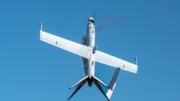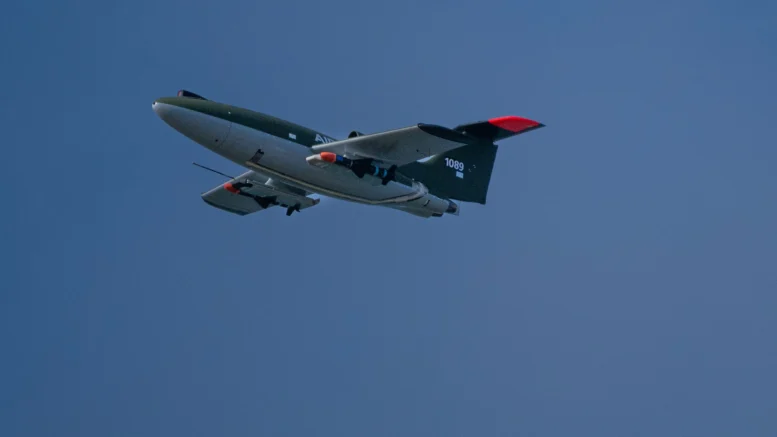
AviationNews – Airbus has announced that its newly developed “Bird of Prey” Uncrewed Aerial System (UAS) will undergo rigorous operational testing over the coming months following a successful live-fire flight debut. The advanced interceptor platform seeks to deliver an affordable, highly scalable countermeasure to defeat massed one-way attack drones on the modern battlefield.
Developed in a rapid nine-month timeline, the Airbus U680 Bird of Prey is a specialized defense asset modified from the rugged Do-DT25 target drone framework. During initial combat trials conducted at a military range in northern Germany, the 160-kilogram aircraft autonomously searched, detected, and classified a medium-sized kamikaze drone. To eliminate the asymmetric threat, Airbus partnered with defense technology startup Frankenburg Technologies to integrate ultra-lightweight, air-launched guided missiles designed to reverse the unfavorable cost economics of modern air defense.
The jet-powered interceptor platform features a compact 2.5-meter wingspan and hits high-subsonic speeds up to 550 kilometers per hour. Operating via the AI-driven Multiplatform Autonomous Reconfigurable and Secure (MARS) mission system, the production model will carry up to eight 65-centimeter Mark I fire-and-forget missiles. This allows a single reusable aircraft to neutralize multiple enemy targets per mission at a significantly lower cost-per-kill compared to traditional, multimillion-dollar anti-aircraft missile arrays.
“Against the current geopolitical and military backdrop, defending against kamikaze drones is a tactical priority that urgently needs to be tackled,” stated Mike Schoellhorn, Chief Executive Officer of Airbus Defence and Space. “With our Bird of Prey and Frankenburg’s affordable Mark I missiles, we are providing armed forces with an effective, cost-efficient interceptor, filling a crucial capability gap in today’s asymmetric conflict theatres.”
As military organizations look toward the future, the rapid proliferation of cheap drone swarms requires highly mobile, network-integrated counter-UAS platforms. Moving forward, Airbus plans to fuse the Bird of Prey into NATO-compatible architectures using its Integrated Battle Management System (IBMS). This strategic integration ensures the platform can function seamlessly as a flexible point-defense layer alongside strategic missile screens to protect sensitive forward military assets and civilian infrastructure.
In summary, the rapid development and successful validation of the Bird of Prey interceptor establishes a new technological paradigm for low-cost aerial defense. By successfully marrying automated threat detection with mass-manufacturable miniature missiles, Airbus is positioned to fundamentally flip the unfavorable spending curve of drone warfare. Armed forces globally can expect subsequent operational evaluations with live warheads throughout the remainder of the year to solidify the platform’s deployment readiness.