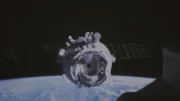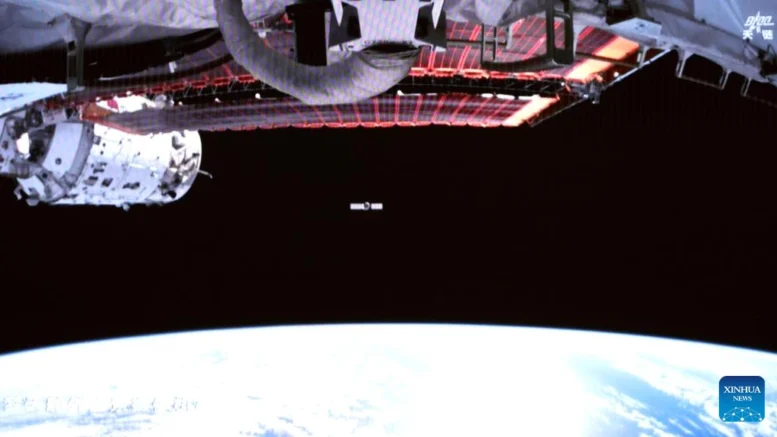
Aviation News – The Tianzhou-9 cargo spacecraft officially undocked from China’s Tiangong space station at 4:34 p.m. Wednesday, beginning its independent flight phase prior to atmospheric re-entry. This departure marks the completion of a vital logistics mission essential for the continued habitation and operation of the orbiting laboratory.
Launched on July 15, 2025, from the Wenchang Spacecraft Launch Site in Hainan, the vessel has spent months integrated with the station. The China Manned Space Agency (CMSA) managed the mission, which was designed to sustain the crew and support scientific advancement. During its stay, the craft served as a primary storage hub and refueling module for the station’s core configuration.
The mission’s primary objective involved delivering a comprehensive suite of astronaut consumables, propellant, and specialized application experiment equipment. These supplies are critical for maintaining the life support systems and the rigorous research schedule of the crew currently in orbit. With its tasks finished, the craft has now transitioned to a controlled trajectory away from the station combination.
Operationally, the Tianzhou-9 will soon perform a de-orbit maneuver to re-enter the Earth’s atmosphere in a controlled manner. While most of the vehicle is expected to burn up during the intense heat of ablation, the CMSA has confirmed that any remaining small debris will fall safely into designated international waters. This controlled disposal ensures the safety of terrestrial populations and prevents the accumulation of long-term orbital debris.
“The cargo craft will re-enter the atmosphere in a controlled manner at an appropriate time,” stated the China Manned Space Agency in their official mission update. They emphasized that the process is carefully monitored to ensure that surviving debris reaches only “designated safe waters.”
The success of this mission paves the way for future Tianzhou logistics flights as China scales its permanent presence in Low Earth Orbit. With the space station now fully operational, these routine resupply cycles are becoming the backbone of China’s long-duration manned spaceflight capabilities. This transition to independent flight signals the readiness for the next phase of station maintenance and crew rotations.
The Tianzhou-9 mission has successfully demonstrated the reliability of China’s heavy-lift cargo delivery systems. By ensuring a steady flow of propellant and scientific gear, the mission has extended the operational life and research potential of the Tiangong space station. Looking ahead, the focus shifts to the next launch in the series to maintain this orbital momentum.