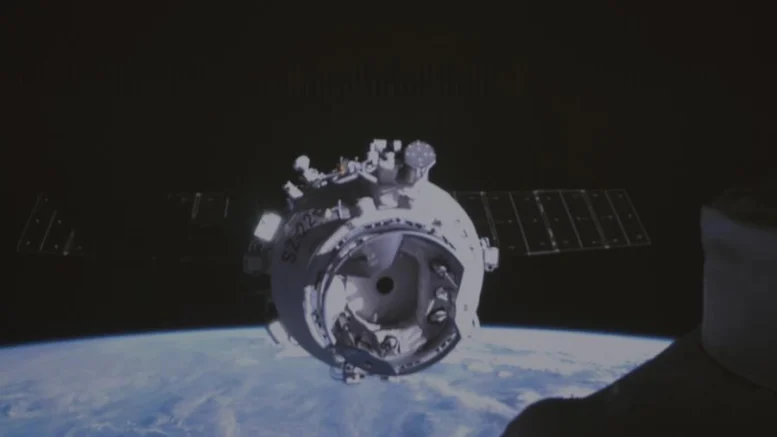
Aviation News – China’s manned space program is poised for a milestone year in 2026, with the China Manned Space Agency (CMSA) announcing plans for three missions to the national space station and significant progress toward an eventual crewed lunar landing.
In 2026, the CMSA will facilitate two crewed missions and one cargo delivery to maintain its orbit-based outpost. This cycle includes the historic integration of astronauts from Hong Kong and Macao, marking a geographic expansion of the program’s participant pool. Additionally, the Shenzhou-23 crew will undertake a critical year-long in-orbit experiment, pushing the boundaries of endurance and scientific research in microgravity.
Since entering its current operational phase, the space station has demonstrated consistent performance, facilitating numerous extravehicular activities and payload transfers. Simultaneously, the crewed lunar exploration program continues to advance rapidly. Engineers have successfully conducted major technical validations for the Long March-10 rocket, the Mengzhou crewed spacecraft, and the Lanyue lunar lander, ensuring that the infrastructure required for a 2030 lunar mission remains on schedule.
“Our program remains committed to the principles of peaceful use and mutual benefit,” stated a representative from the CMSA. “By expanding international collaboration—including our work with Pakistan—and perfecting our deep-space hardware, we are building a foundation for humanity’s next great leap into the cosmos.”
Efforts in 2026 will focus on upgrading launch infrastructure at the Wenchang Spacecraft Launch Site to support future lunar activities. Beyond hardware, China continues to foster international cooperation, with a Pakistani astronaut scheduled to join a short-term mission to conduct scientific experiments, further solidifying global partnerships in human spaceflight.
With a stable, fully operational space station and a clear roadmap toward the moon, China is rapidly maturing its space capabilities. These 2026 initiatives serve as a decisive precursor to the nation’s 2030 lunar objectives.