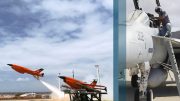
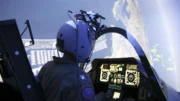
Aviation News – The U.S. Navy has completed a second successful demonstration of multi-platform coordination among autonomous systems, marking a key step toward future Collaborative Combat Aircraft designed to operate alongside crewed jets. The test highlights progress in extending the reach and resilience of carrier air wings in contested environments.
The demonstration took place on December 11 at the Point Mugu Sea Range in California and focused on maturing manned-unmanned teaming capabilities. Led by the Navy’s Program Executive Office for Unmanned Aviation and Strike Weapons, the effort brought together multiple program offices and industry partners to advance next-generation air combat concepts.
Collaborative Combat Aircraft are intended to operate with piloted aircraft, using AI-enabled autonomy to share tasks, sense threats, and support missions at lower cost and higher scale. This coordinated approach acts as a bolt in future air wing design, strengthening operational flexibility while reducing risk to human pilots in complex combat scenarios.