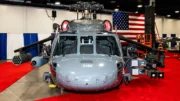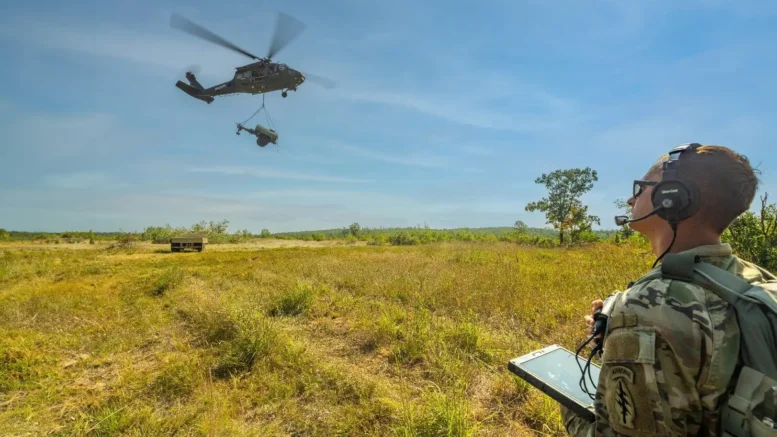
Aviation News – A U.S. soldier has successfully commanded Lockheed Martin Sikorsky’s Optionally Piloted Black Hawk helicopter in real-world military exercises, marking a major step toward autonomous aviation in defense operations.
For the first time, a non-aviator soldier—trained in under an hour—planned and executed live missions using the MATRIX™-powered OPV (Optionally Piloted Vehicle) Black Hawk. The demonstration took place during Northern Strike 25-2 in August, a joint exercise involving the Defense Advanced Research Projects Agency (DARPA) and the Joint Personnel Recovery Agency. The event showcased how autonomous flight systems can extend operational range and minimize human risk in combat and recovery missions.
Powered by Sikorsky’s MATRIX™ autonomy technology, the OPV Black Hawk enables both crewed and uncrewed operation. Using a handheld tablet interface, the Army National Guard Sergeant First Class directed the aircraft on a 70-nautical-mile mission and executed multiple precision supply drops—without a pilot in the cockpit. The system combines advanced flight controls, sensors, and AI to perform complex tasks safely and independently.
“This demonstration proves how autonomy can empower soldiers on the ground,” said a Sikorsky spokesperson. “By reducing the need for trained aviators in certain missions, we’re enhancing flexibility, safety, and mission reach for future operations.”
The successful trial opens the door for broader integration of autonomous aircraft into U.S. military missions, particularly in high-risk zones. Future deployments could see OPV Black Hawks supporting logistics, search and rescue, and medical evacuation missions—all under soldier control.
The exercise marks a defining milestone in military aviation. As the U.S. Army explores next-generation capabilities, the OPV Black Hawk demonstrates how advanced autonomy can make missions faster, safer, and more effective for tomorrow’s warfighters.
Photo Lockheed Martin