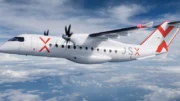
Aviation News – As the aviation industry confronts increasing pressure to decarbonize, hydrogen-powered aircraft are emerging as one of the most promising solutions for sustainable flight. With the potential to eliminate in-flight carbon emissions entirely, hydrogen propulsion could transform both regional and long-haul aviation within the next two decades.
Hydrogen aircraft operate using either hydrogen fuel cells, which generate electricity to power electric motors, or combustion engines adapted to burn hydrogen directly. Both methods offer the advantage of zero carbon emissions during operation, with water vapor being the primary byproduct.

Airbus has been one of the leading advocates of hydrogen in aviation, unveiling its ZEROe concept aircraft with plans to bring a hydrogen-powered commercial airliner to market by 2035. Other aerospace companies and startups—such as ZeroAvia, Universal Hydrogen, and H2Fly—are conducting test flights and developing hydrogen propulsion systems for smaller regional aircraft, laying the groundwork for scalability.
While the environmental benefits are compelling, significant challenges remain. Hydrogen has a lower energy density by volume than jet fuel, requiring larger or cryogenic tanks to store it at high pressure or low temperatures. This impacts aircraft design and weight distribution, especially for long-haul routes.
Infrastructure is another hurdle. Airports worldwide would need to invest heavily in hydrogen production, storage, and refueling capabilities. Green hydrogen—produced from renewable energy—is crucial for realizing the full climate benefits, but global production is still limited and costly.
Despite these barriers, momentum is growing. Several countries, including the UK, Germany, and Japan, are funding hydrogen aviation research as part of their broader climate strategies. The European Union’s Clean Aviation program also prioritizes hydrogen as a key pillar of sustainable flight.
As governments, manufacturers, and energy providers align around hydrogen, the aviation sector could soon see a shift away from fossil fuels. If successful, hydrogen aircraft will play a vital role in achieving net-zero aviation by mid-century.
The skies of tomorrow may not just be quieter—they may be cleaner too.