Aviation News – General Atomics Aeronautical Systems, Inc. and Tactical Air Support, Inc. successfully demonstrated advanced Human-Machine Teaming during a July 21 flight test, using passive sensors and autonomous software to track and eliminate an airborne target.
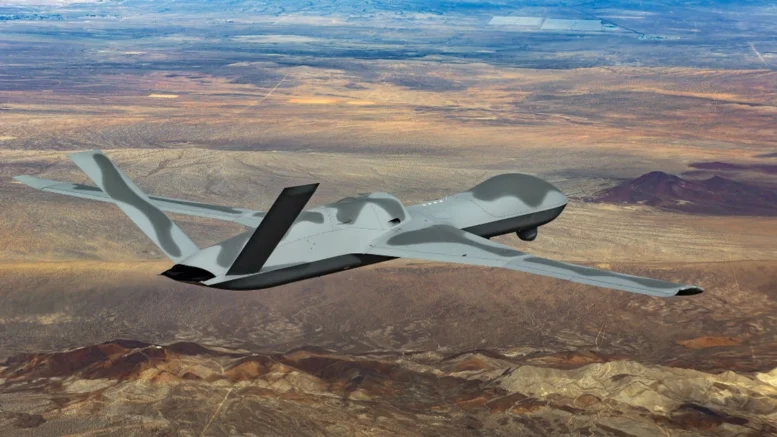
The flight demonstration took place during a large force exercise, pairing a piloted F-5 Advanced Tiger from Tactical Air Support with an uncrewed Collaborative Combat Aircraft test bed provided by GA-ASI. Conducted to prove Infrared Search and Track Multi-Ship Ranging capabilities, the live exercise validated how crewed fighters and autonomous drones can collaboratively close the kill chain without relying on radar emissions.
Both platforms operated using GA-ASI’s TacACE tactical autonomy ecosystem, built on the U.S. government’s Agile Mission Suite open architecture reference framework. Equipped with specialized infrared sensors, the two aircraft used a Beyond Line of Sight data link to seamlessly transmit targeting commands from the F-5 to the autonomous unmanned jet.
The system operates by fusing passive infrared data from both the crewed fighter and the uncrewed CCA platform to calculate precise target ranges without exposing their positions. By sharing target data through open-architecture government reference standards, the flight confirmed that equipment from different defense vendors can interoperate natively, preventing single-supplier lock-in for the U.S. Air Force.
“With this flight, we moved beyond simply flying an autonomous jet and showed how a manned fighter and an autonomous CCA can work together to find, track, and engage a target using passive sensors and shared autonomy,” stated Michael Roberts, Advanced Programs Emerging Technology Director at GA-ASI. “This is the kind of operationally relevant mission that will allow autonomous CCAs to deploy alongside manned aircraft and deliver real combat capability for the warfighter.”
This successful integration paves the way for modular, multi-vendor combat ecosystems across modern air fleets. Future military acquisitions will increasingly rely on open-architecture autonomy to rapidly field interoperable uncrewed aircraft alongside traditional fighters.
The live demonstration marks a pivotal milestone in bringing semi-autonomous drones to frontline combat units. Demonstrating reliable multi-ship data sharing proves the viability of plug-and-play military avionics. Continued field tests will accelerate production readiness and refine operational tactics for future human-machine air combat.