Aviation News – Boeing and Leonardo Team Up on Next-Generation Army Flight School Program
Boeing and Leonardo have announced a joint effort to deliver a contractor-owned, contractor-operated training solution for the U.S. Army’s Flight School Next program, aimed at modernizing and streamlining the Army’s rotary-wing pilot training. The collaboration, revealed Monday at the Association of the U.S. Army’s annual conference in Washington, seeks to enhance pilot readiness and adaptability in future operations.
The initiative comes as the U.S. Army undertakes a major overhaul of its flight school, focusing on a more flexible and scalable approach to helicopter pilot instruction. Boeing and Leonardo plan to combine their strengths — Boeing’s global training and systems integration capabilities and Leonardo’s proven AW119T training helicopter — to create a comprehensive next-generation training package. The program will emphasize a return to fundamentals, prioritizing skill development through single-engine helicopter training.
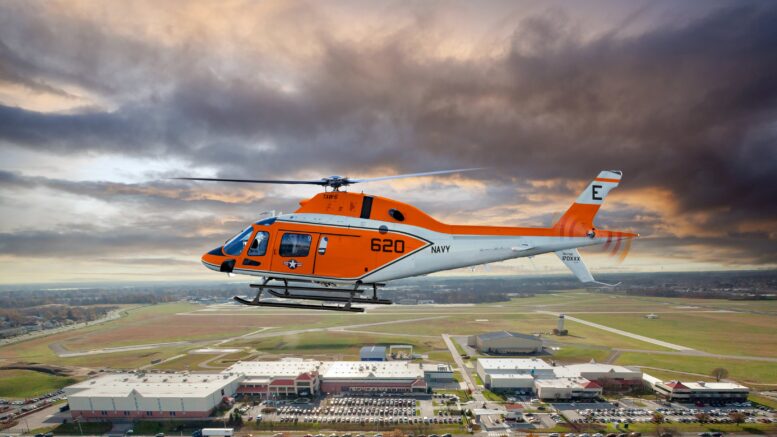
Under the proposed solution, Boeing will manage program integration, simulation, and instructor training, building on its extensive experience with AH-64 Apache fleet training worldwide. Leonardo’s AW119T helicopter, which has logged over 100,000 flight hours including 16,000 under instrument flight rules, will serve as the cornerstone of the training fleet. The model’s reliability is already well established, with 130 AW119Ts currently operated by the U.S. Navy near Fort Rucker.
“This partnership combines the strengths of two global aviation leaders to deliver a complete, proven training solution for Army aviators,” said a Boeing spokesperson. “By integrating real-world aircraft performance with advanced simulation and instructor development, we can create a safer, more efficient training pipeline.”
Looking ahead, the Boeing-Leonardo partnership aims to support the Army’s goals of improving pilot proficiency, reducing costs, and accelerating readiness. The companies believe their model could set a new standard for how the military approaches rotary-wing training in an era of evolving operational demands.
The proposal highlights a broader shift toward public-private collaboration in defense aviation training. If adopted, Boeing and Leonardo’s solution could transform how the U.S. Army prepares future helicopter pilots, combining advanced technology, proven aircraft, and deep operational expertise.
