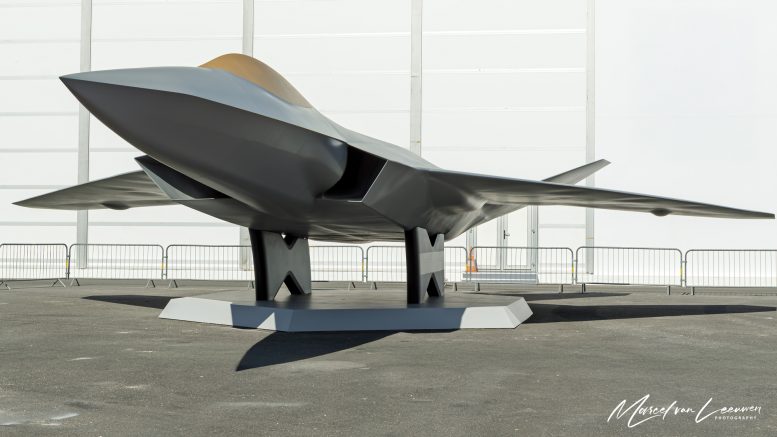
What’s Up? Europe’s ambitious new fighter jet project—FCAS (Future Combat Air System)—is hitting fresh delays. Germany and France were supposed to rev things up now, but the timeline has slid to year-end as leaders take more time to hash things out.
What’s Causing the Hold-Up?
- France Wants to Take the Wheel
French industry, particularly Dassault Aviation, is demanding a heavyweight 80% share of the project, asserting its leadership role—a move Berlin says is holding everything back. - Germany Sounding the Alarm
A German defense lawmaker cautioned that if a decision isn’t made in Toulon soon, the entire project could slip into unrealism. Tough talk—but maybe necessary. - Industry Leaders Lose Patience
Airbus has warned that the disagreement—especially over governance and workshare—must be resolved by year-end or risk the project falling apart. - Top-Level Talks Set, but Outcomes Delayed
Chancellor Friedrich Merz and President Emmanuel Macron have agreed to decide how to move forward by the end of the year, even if they don’t fully resolve the issue during their upcoming
What’s at Stake?
- Big Money on the Line
FCAS isn’t small change—it’s pegged at over €100 billion, intended to produce a sixth-generation fighter jet to replace Rafales and Eurofighters by 2040. The system includes manned jets, drone “wingmen,” sensors, and a futuristic combat cloud. - Phase 2 (Demonstrator Jets) Delayed
Without consensus, the second phase—designing and flying real jet demonstrators—may stall, undermining future test flights. - Political Rift Could Fracture Europe’s Defense Cohesion
The spat between Dassault and Airbus threatens to divide France, Germany, and Spain, paving the way for alternative partnerships like the UK-Italy-Japan GCAP initiative.
Why This Feels Like a Euro-Defense Soap Opera
- Complex decision-making models, national pride, and corporate power plays are all colliding.
- Germany fears “financing a French project with German money,” while Spain also voices frustration over France’s dominance.
- Airbus points out its track record with multi-nation jets like the Eurofighter—but in FCAS, they seem sidelined.
Future Combat Air System (FCAS) – Tech Specs and Design Highlights
Overall Vision: A “System of Systems”
- FCAS is designed as a Next-Generation Weapon System (NGWS)—not a single aircraft but an interconnected network. It includes:
- New Generation Fighter (NGF): a piloted sixth-generation stealth jet.
- Remote Carriers: unmanned drones (swarming, stealthy, modular).
- Combat (Air) Cloud: a secure, real-time data backbone linking all assets across air, sea, land, and space.
Timeline Overview
- Phase 1B (demonstrator development) is underway and expected to wrap by 2025.
- The first test flights of NGF and its drone wingmen, fully networked via the Combat Cloud, are projected around 2028–2029.
- Operational service rollout is aimed for 2040.
NGF – The Main Fighter Jet
- Core of the system: a sixth-generation combat aircraft planned to replace Rafales (France) and Eurofighters (Germany/Spain).
- Stealth-forward design, advanced sensors, and AI-driven systems are central, though full performance specs remain under wraps.
Remote Carriers – Drone Wingmen
- Operate in various forms—Loyal Wingmen, Light Remote Carriers (LRC), Heavy Remote Carriers (HRC).
- Roles include reconnaissance, electronic warfare, and target engagement via modular payloads.
- Built for stealth, networked operations, real-time data exchange, and deployable from platforms like A400M, Eurofighter, or future FCAS jets.
Engine and Powerplant
- Developed by the European Military Engine Team (EUMET): Safran Aircraft Engines leads design; MTU Aero Engines contributes through compressors, control systems, and maintenance.
Combat Cloud – The Data Backbone
- Enables real-time, secure, multi-domain communication between NGF, drones, and allied systems.
- Uses open architecture to integrate existing platforms (e.g., Eurofighter, Eurodrone) while connecting to sea, land, space, and cyber domains.
Quick Specs Table
| Feature | Details |
|---|---|
| Core Component | Next Generation Fighter (manned jet) + Remote Carriers (drones) |
| Networking | Combat Cloud enabling multi-domain connectivity |
| Demonstrator Phase | Phase 1B underway; test flights circa 2028–2029 |
| Operational Target | Full deployment by ~2040 |
| Engine Developers | Safran (lead), MTU (compressors/maintenance) |
| Missions Enabled | Stealth ops, unmanned teaming, ISR, electronic warfare, multi-target strikes |
Why FCAS Tech Matters
- Ultra-Connected Combat: Joint operations across air, land, sea, and cyber – powered by AI and real-time data.
- Flexible Force Multipliers: Drones that act autonomously yet under pilot direction, reducing risk.
- Industrial Edge: Leads future European defense innovation and interoperability.
- Future-Proofing: Modular, scalable design built to adapt through decades of tech evolution.