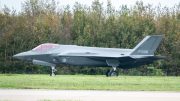
AviationNews – Lockheed Martin has officially rolled out the F-16 Block 70/72, an advanced fourth-generation fighter jet engineered to stay operational through at least 2060. The milestone marks a major evolution for Western aviation, ensuring frontline air forces maintain cutting-edge air superiority without transitioning entirely to fifth-generation fleets.
The defense contractor has already delivered 41 of these new aircraft to seven partner countries, while managing a robust order backlog of 119 jets. This modernized variant builds on a worldwide fleet of roughly 2,800 active F-16s deployed across 29 nations. Collectively, the global Fighting Falcon program has accumulated more than 21 million flight hours across 14 million sorties, underscoring its role as the backbone of modern coalition airpower.
At the heart of the Block 70/72 upgrade is Northrop Grumman’s APG-83 Active Electronically Scanned Array (AESA) radar, which delivers situational awareness comparable to fifth-generation fighters like the F-35. The aircraft features a reinforced airframe with a structural service life of 12,000 hours—a 50 percent increase over previous production models. It also integrates automated safety architectures, such as the life-saving Automatic Ground Collision Avoidance System (Auto GCAS), digital avionics, and a high-resolution Center Pedestal Display.
“One of the things that we continuously demonstrate is that our platforms, we continue to iterate and evolve them and improve them,” said Evan Scott, Chief Financial Officer at Lockheed Martin, emphasizing the fighter’s technological trajectory during an executive briefing. “An F-16 today is very different from an F-16 when we started production.”
As air forces worldwide balance procurement budgets and geopolitical tensions, the Block 70/72 presents an operational bridge for nations modernizing their defense posture. Defense ministries seeking reliable interoperability with allied forces are increasingly looking toward this proven platform, with production scaling in Greenville, South Carolina, to meet mounting international demand.
The Block 70/72 guarantees that the venerable Fighting Falcon will remain a dominant force in global skies for the next four decades. By pairing fifth-generation avionics with a proven, cost-effective airframe, Lockheed Martin has positioned the platform to handle contested airspaces well into the mid-21st century.