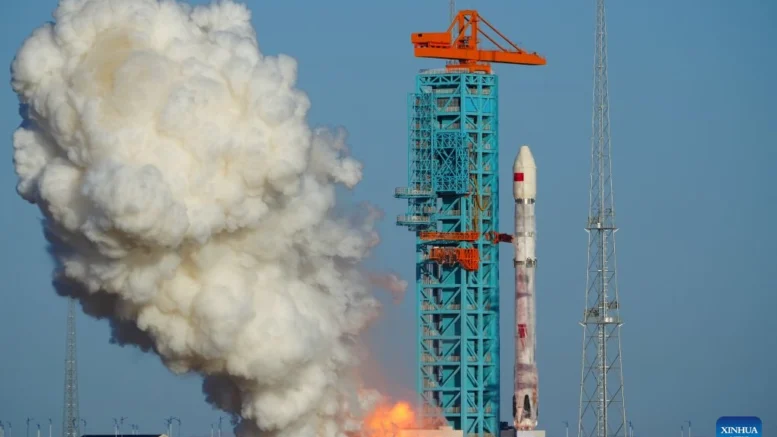
Aviation News – The Zhuque-3 reusable rocket land recovery marked a monumental historic milestone on Wednesday morning as China successfully recovered an orbital-class rocket’s first stage on land for the first time. The landmark flight saw the Zhuque-3 Y2 launch vehicle blast off at 7:35 a.m. Beijing Time from the Dongfeng commercial space innovation pilot zone before executing a controlled touchdown in northwest China.
Developed by Chinese commercial space pioneer LandSpace, the Zhuque-3 represents a major technological step forward in China’s push for low-cost, high-frequency space operations. The mission built upon momentum from recent domestic space triumphs, including the successful sea-based net recovery of the Long March-10B’s first stage executed on July 10. While sea recoveries offer flexibility, land-based recovery allows for streamlined logistics, faster refurbishments, and direct transportation to manufacturing facilities.
The mission achieved complete success across both hardware stages during its operational profile. Following stage separation, the rocket’s second stage continued its powered ascent, successfully delivering the onboard Honghu-03 satellite into its designated target orbit. Simultaneously, the first stage initiated its pre-programmed return trajectory toward the designated touchdown area.
Executing a pinpoint touchdown in Minqin County, Gansu Province, required navigating extreme aerodynamic forces and precise propulsion adjustments. Approximately 137 seconds after liftoff, the booster separated and initiated its return sequence, which included high-altitude flight attitude adjustments, re-entry propulsive deceleration, controlled aerodynamic gliding, a final deceleration burn, and full deployment of its landing legs. Operating at supersonic velocity during its low-altitude transition created an immense engineering challenge, where precise burn timing was vital to ensure a soft, vertical touchdown on the landing pad.
“As the rocket tore through low altitude skies, it was still at a supersonic speed. There was only a single chance in such process, just like nailing a high-speed parking maneuver in one shot,” said Dai Zheng, Zhuque-3’s chief commander.
This successful touchdown accelerates commercial launch capabilities and establishes essential operational foundations for reusable spaceflight architectures. By proving that liquid methane-fueled first stages can be safely guided back to land-based pads, operators pave the way toward drastic reductions in payload insertion costs. Looking ahead, data gathered from this mission will inform future rapid-refurbishment protocols, supporting China’s expanding satellite constellation deployment schedules and growing commercial launch manifest.