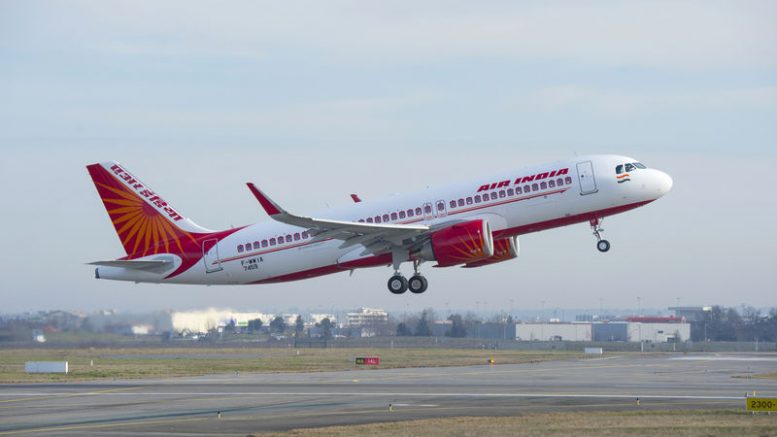
AviationNews – India’s Directorate General of Civil Aviation (DGCA) has formally initiated an investigation following a severe clear air turbulence incident on Air India flight AI2379, which injured 13 passengers and four crew members. The event highlights growing concerns over atmospheric instability and flight safety along major international air routes.
The incident occurred on August 4, 2026, while the Airbus A320neo (registration VT-EXO) was operating a scheduled service from Phuket International Airport to Indira Gandhi International Airport in Delhi with 137 passengers and eight crew members on board. Cruising at an altitude of 36,000 feet over Odisha, the aircraft encountered sudden in-flight turbulence, triggering a rapid loss of altitude of approximately 300 feet. Despite the violent movement, the flight crew maintained control and landed safely in Delhi at 11:07 AM local time, where emergency medical personnel immediately met the aircraft to treat injured individuals and transfer those requiring further evaluation to local hospitals.
Atmospheric instability and unforecast clear air turbulence present critical operational challenges because they occur in cloudless airspace, making them invisible to standard onboard weather radar. The sudden altitude drop generated intense vertical G-forces that unseated unsecured passengers and active cabin crew, causing several individuals to make contact with the overhead bins and cabin structure. Investigators from the DGCA have already impounded the aircraft in a hangar to secure the Flight Data Recorder (FDR) and Cockpit Voice Recorder (CVR) to analyze the precise aerodynamic and atmospheric parameters during the event.
“The safety and well-being of our passengers and crew remain Air India’s highest priority,” stated an Air India spokesperson regarding the event. “We are providing all necessary support to those affected and are cooperating fully with the relevant authorities as part of the investigation.”
As global climate patterns increase the frequency and severity of clear air turbulence across busy air corridors, aviation regulators and airlines are intensifying focus on real-time weather forecasting and stricter seatbelt compliance policies. The findings from the DGCA probe will likely influence updated crew operational procedures and enhanced flight monitoring protocols across South Asian airspace.
This investigation into Air India flight AI2379 underscores the persistent danger atmospheric instability poses to modern commercial aviation. By analyzing the retrieved black box data, safety regulators aim to improve predictive turbulence modeling and protect future flights. The incident serves as a vital reminder for passengers to remain buckled whenever seated during cruise flight.


