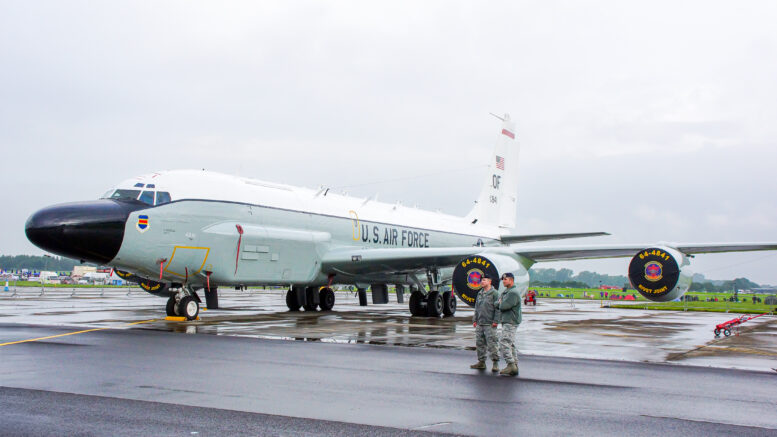
Aviation News – A French A330 Multi Role Tanker Transport Phénix successfully refueled U.S. and U.K. RC-135 reconnaissance aircraft over central France during Exercise Ravitaillement en Vol, marking the first tri-nation air-to-air refueling integration within the RC-135 enterprise. This historic milestone dramatically expands NATO’s intelligence, surveillance, and reconnaissance capabilities by connecting allied fleets to a broader global refueling network.
The landmark exercise brought together three key alliance platforms: a U.S. Air Force TC-135 training aircraft, a Royal Air Force RC-135 Rivet Joint, and a French Air and Space Force A330 MRTT Phénix. Planning for the integration built upon initial flight testing conducted at Edwards Air Force Base, where crews drew key technical data from previous trials with Australian tanker variants. Military planners from all three nations coordinated extensively through diplomatic channels to secure airspace clearances and establish standardized operating procedures.
Multiple defense entities executed the joint maneuvers, including the U.S. 55th Wing, the Nebraska Air National Guard’s 170th Group, RAF Waddington’s 51 and 56 squadrons, and France’s 31st Air Refueling and Strategic Transport Wing. The combined personnel conducted joint simulator training, tactical mission briefings, and live aerial sorties in designated military airspace over France. This collaborative effort proved that NATO allies can seamlessly merge personnel, planning staff, and specialized aircraft into an integrated operational force.
Technically, the successful connection allows RC-135 reconnaissance fleets to tap into more than 30 allied A330 MRTT tankers operating worldwide. The A330 Phénix utilizes advanced boom refueling systems to transfer fuel mid-flight, significantly increasing the receiver aircraft’s flight endurance. This operational capability extends time on station for critical intelligence missions along NATO’s eastern flank and across vast distances in the Indo-Pacific, allowing commanders to gather continuous real-time data without frequent ground turnarounds.
Emphasizing the strategic importance of this operational breakthrough, representatives from the 55th Wing noted that “the integration expands operational reach and flexibility across multiple theaters by increasing refueling options, extending time on station and giving commanders greater freedom to respond as mission demands evolve.”
Moving forward, defense leadership must now institutionalize these lessons to turn a single exercise into a permanent, repeatable operational model across NATO commands. Air forces should continually refine shared tactics, techniques, and procedures to ensure seamless rapid deployment during real-world crises. Expanding these multinational tanker partnerships will ensure allied forces maintain operational superiority, deter potential adversaries, and respond swiftly to global security challenges.
The historic refueling exercise over central France marks a decisive leap forward in multinational defense integration and aerial persistence. By uniting American, British, and French air power into a single supporting force, NATO has strengthened its collective deterrence and mission flexibility. As global security dynamics demand greater agility, routine inter-fleet refueling will serve as a cornerstone for future joint coalition operations.


