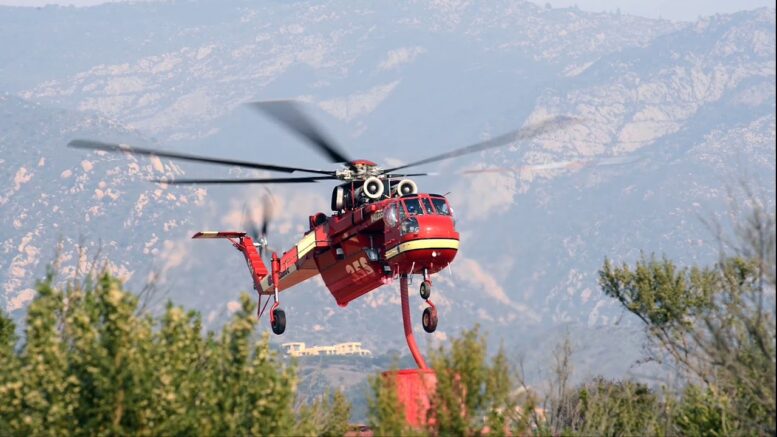
Aviation News – A Sikorsky CH-54A Tarhe firefighting helicopter crashed into the Three Creeks Reservoir near Beaver, Utah, destroying the aircraft and killing both pilots on board. The tragic incident occurred during an active wildfire suppression mission, highlighting the severe hazards faced by wildland aerial firefighters.
The aircraft, registered as N793HT, was deployed to assist local and federal crews tackling wildfires in southern Utah. Officials report that the twin-engine heavy-lift helicopter was actively engaged in water-scooping operations when the fatal accident transpired. Investigators from federal aviation authorities have initiated a comprehensive inquiry to establish the precise chain of events leading up to the impact.
Originally built as a military transport during the Cold War era, the CH-54A Tarhe platform has long served as a backbone for commercial heavy-lift operations and aerial firefighting. Private operators rely on these specialized airframes to lift thousands of gallons of water from lakes and reservoirs directly onto steep, impassable terrain. The loss of N793HT marks a severe blow to the specialized aerial firefighting fleet serving Western wildland fire management.
Designed around a distinctive skeleton fuselage, the Sikorsky CH-54A Tarhe delivers massive lift capacity using twin turboshaft engines and a heavy-duty winch system. In wildfire suppression, the airframe carries an expansive belly tank or heavy water bucket to deliver targeted drops on intense fire lines. This operational role requires flying at extremely low altitudes in turbulent conditions, placing extraordinary mechanical stress on the aircraft and demanding total precision from the flight crew.
”Our hearts go out to the families and colleagues of the brave aviators who lost their lives while protecting communities,” stated an emergency management spokesperson. “Their sacrifice underscores the immense danger and unyielding dedication inherent in aerial firefighting operations.”
This catastrophic crash reinforces urgent calls for rigorous aviation safety protocols and enhanced structural inspections across aging specialized fleets. Fire agencies and commercial operators face growing pressure to maintain strict maintenance standards while modernizing equipment to protect flight crews. As wildfire seasons become increasingly aggressive, ensuring airworthiness and pilot protection remains paramount for emergency responders nationwide.
The loss of N793HT and its two dedicated aviators deeply impacts the emergency response and wildland firefighting communities. Federal safety investigators continue to document wreckage at Three Creeks Reservoir to identify potential mechanical or environmental causes. Moving forward, the aviation industry will closely analyze the findings to reinforce safety measures and safeguard aerial crews on the front lines.