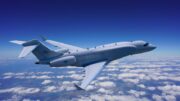
Aviation News – South Korea has finalized a deal to acquire two additional airborne electronic warfare platforms based on the Bombardier Global 6500 business jet to significantly bolster its regional surveillance and defense readiness. This strategic procurement strengthens the nation’s aerial posture amid rising geopolitical tensions, ensuring its armed forces possess cutting-edge tactical shielding and threat-detection capabilities.
The selection of these business-jet-derived aircraft marks a continuing trend for the Republic of Korea Air Force (ROKAF), which integrates commercial efficiency with military-grade utility. The two incoming electronic warfare platforms will eventually complement the four Global 6500-based airborne early warning and control (AEW&C) aircraft that Seoul previously ordered. This combined fleet solidifies a unified logistics chain and training program, leveraging a single, highly reliable airframe to lower overall life-cycle maintenance costs for the military.
These highly modified aircraft serve as sophisticated, flying command hubs designed to survive and operate in heavily contested environments. Utilizing the ultra-long-range Bombardier Global 6500 platform allows the crews to fly longer missions with a service ceiling that surpasses standard commercial airliners, providing superior line-of-sight for sensitive onboard sensors. The advanced onboard systems will intercept, analyze, and jam enemy radar and communication signals, shielding friendly assets and blinding adversary defense networks across vast distances.
“This acquisition represents a monumental step forward in establishing a seamless, modern electronic shield over the peninsula,” noted defense analysts tracking East Asian military modernization. “Utilizing a proven, high-performance platform like the Global 6500 ensures our operators can deploy rapidly, stay airborne longer, and seamlessly share real-time threat intelligence with allied joint-strike networks.”
As threats in the region grow more digitally complex, military commanders look to these versatile business jet platforms to replace aging, heavy-maintenance legacy turboprops. Strategic planners expect the integration of these systems to dramatically shorten response times and enhance cooperative engagement capabilities during joint regional operations.
South Korea’s decision to double down on the Bombardier Global 6500 platform highlights a clear shift toward modern, agile, and cost-effective airborne electronic combat operations. The newly ordered platforms will work in tandem with the upcoming AEW&C fleet to deliver a comprehensive, multi-layered picture of local airspace. By investing in these sophisticated assets, Seoul ensures its defense capabilities remain robustly prepared for any electronic or conventional threats in the decades to come.