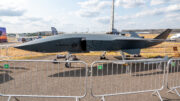
Aviation News – Boeing has revealed a major technology roadmap upgrade for its MQ-28 Ghost Bat uncrewed combat aircraft, significantly boosting its payload, range, and combat flexibility. The announcement, made at the ILA Berlin Air Show in Germany, marks a critical step forward in providing global defense forces with a highly adaptable, long-range robotic wingman.
The aerospace giant integrated these new capabilities to directly address the evolving requirements of modern air warfare. During the aerospace exhibition, developers showcased how the MQ-28 Ghost Bat will transition from a loyal wingman prototype into a fully optimized, multi-role combat platform. The development context centers on giving military commanders greater freedom of action in heavily contested airspace without risking crewed fighter jets.
Central to the upgrade package is a physically altered airframe featuring an increased wingspan. This structural modification allows the uncrewed jet to carry an additional 2,000 pounds of fuel, stores, and mission payloads, which drastically extends its operational radius. Additionally, engineers redesigned the aircraft to feature two internal weapons stations, enabling the platform to secretly carry either two AMRAAM missiles or four small diameter bombs.
Technically, the aircraft benefits from an upgraded, modular missionised nose that supports the swift insertion of third-party radar or sensor capabilities. Operators can also maintain contact with the drone over unlimited standoff distances thanks to newly integrated Beyond Line of Sight communications links, which route data directly to crewed aircraft, naval vessels, or ground stations. Furthermore, open standards software compliant with Government Reference Architecture ensures that military users can rapidly rewrite code to tailor weapons, autonomy, and command configurations on the fly.
“The new features within the MQ-28 technology roadmap further enhance the platform’s flexibility, range, and capacity for global customers,” the company shared during the unveiling, emphasizing how the enhancements optimize the aircraft for complex, collaborative combat operations.
This technological leap signals a shift toward cheaper, mass-producible uncrewed systems that can supplement aging fighter fleets. By moving heavy munitions inside the airframe and widening the wings, the platform bridges the gap between stealthy reconnaissance drones and heavy bombers. Ultimately, the upgraded aircraft provides a blueprint for how future air forces will project power safely from thousands of miles away.
The deployment of the expanded roadmap reflects a turning point for autonomous aviation, proving that uncrewed systems can match the weapon carrying capacity of traditional fighter aircraft. Military aviation planners now have access to a platform that easily shifts from a reconnaissance asset to a heavily armed strike partner. As air defense systems worldwide grow more lethal, the ability to swap payloads rapidly via an open-architecture nose ensures the aircraft will remain relevant against rapidly evolving electronic threats for decades to come.