Aviation News – Switzerland’s ambitious plan to modernize its air force is hitting turbulence as rising costs may force the government to slash its order of Lockheed Martin F-35A fighter jets. The Swiss Federal Council recently requested nearly 400 million CHF in additional funding to cover a significant budget gap in the multi-billion dollar procurement program.
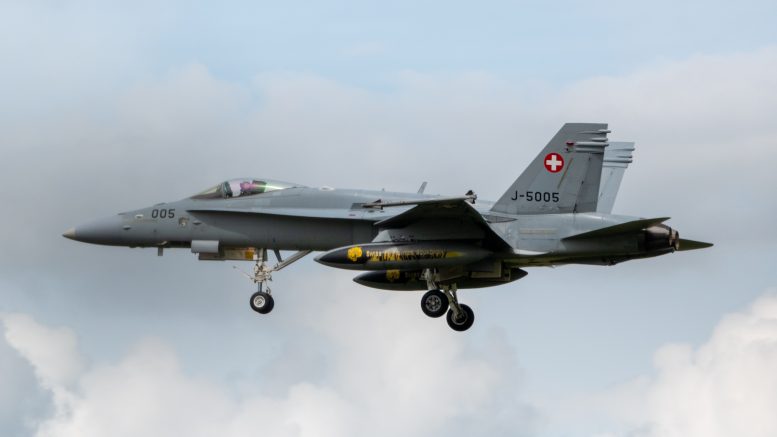
The financial strain became evident in March 2026 when the Swiss Federal Council officially moved to secure an extra 394 million CHF (€430 million). This request comes on top of the original credit of 6.04 billion CHF (€6.6 billion) approved by voters. The selection of the American-made stealth fighter was intended to replace the aging fleet of F/A-18 Hornets and F-5 Tigers, but the shifting economic landscape has complicated the delivery timeline and total expenditure.
If the additional funding is not effectively managed or if costs continue to climb, Swiss defense officials warn that the total number of aircraft could be reduced. The initial plan to acquire 36 aircraft is now under review, with the possibility of the fleet shrinking to just 30 units. This potential reduction has sparked debate regarding the nation’s ability to maintain a continuous air police presence and fulfill its long-term sovereignty requirements.
The F-35A Lightning II is a fifth-generation fighter characterized by advanced stealth technology, integrated sensor suites, and superior data-linking capabilities. For Switzerland, the aircraft represents a leap in operational efficiency, allowing pilots to operate in contested environments with high survivability. However, the technical complexity of the platform often leads to fluctuating maintenance and acquisition costs that challenge fixed-budget defense strategies.
“The additional credit is necessary to ensure that the transition to the next generation of air defense remains on track despite global inflationary pressures,” a government spokesperson noted during the budget announcement. They emphasized that securing the modern fleet is vital for Swiss national security in an increasingly unstable European geopolitical climate.
Looking ahead, the Swiss Parliament must now deliberate on whether to approve the supplemental credit or accept a diminished fleet. This decision will dictate the strength of the Swiss Air Force for the next four decades. Citizens and defense analysts alike are watching closely to see if the government can stabilize the program’s finances before the final production slots are locked in.
The procurement of the F-35A remains a cornerstone of Swiss defense policy despite the current financial hurdles. While the budget increase poses a political challenge, the Federal Council maintains that the aircraft is the most capable tool for protecting Swiss airspace. The final outcome of these negotiations will determine if Switzerland receives its full complement of jets or settles for a smaller, more expensive fleet.