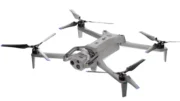
AviationNews – Northrop Grumman has won the Department of War’s Lethality Prize Challenge, securing its role as a preferred payload provider for the massive Drone Dominance Program. This selection enables the defense contractor to supply standardized munitions to support the deployment of over 200,000 small military drones by 2027.
Announced on May 18, 2026, the $1 billion initiative focuses on rapidly fielding low-cost, consumable unmanned aerial systems (UAS) to enhance frontline capabilities. Northrop Grumman stands out as one of five select vendors tasked with scaling production-ready payloads to complement rapid drone manufacturing. To support these aggressive delivery timelines and meet national security needs, the company recently executed a $2 billion investment into infrastructure, munition research, and facility modernization.
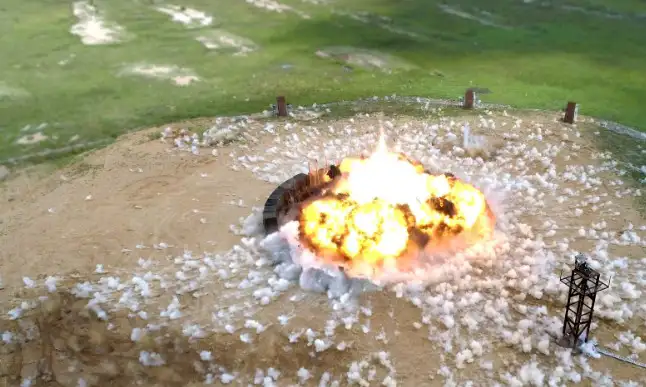
The company will supply its off-the-shelf Common UAS Payload, an advanced fuze and effects module built with rugged electronics and mature energetics. Operating on a Modular Open Systems Approach, the payload integrates seamlessly across diverse aerial, maritime, and ground-based unmanned platforms using standard interfaces. This universal compatibility directly satisfies the U.S. Army’s Purpose-Built Attritable Systems guidelines, eliminating time-consuming custom redesigns while significantly lowering lifecycle costs.
“The Drone Dominance Program demands payloads ready to integrate and deploy immediately – no delays, no redesigns,” stated Tanya Santers, director of fuze and warheads at Northrop Grumman. “Our Common UAS Payload meets this need with speed, safety and interoperability in mind, enabling military dominance now and into the future.”
This partnership establishes a standardized, high-speed production workflow required to stabilize the defense supply chain before the 2027 fleet deployment deadline. Defense administrators and third-party drone manufacturers must actively adopt these pre-vetted payloads to maximize cross-domain battlefield interoperability. Moving forward, the defense sector must prioritize scalable, modular weapons systems to maintain a strategic advantage in rapidly shifting global security environments.
Ultimately, the integration of these standardized payloads marks a pivotal transition toward cost-effective, high-volume uncrewed warfare. By combining commercial drone manufacturing with mass-producible lethal effects, the military establishes a sustainable model for distributed defense. The long-term success of this rollout will likely dictate international drone tactics and security frameworks for years to come.