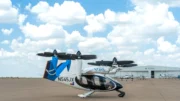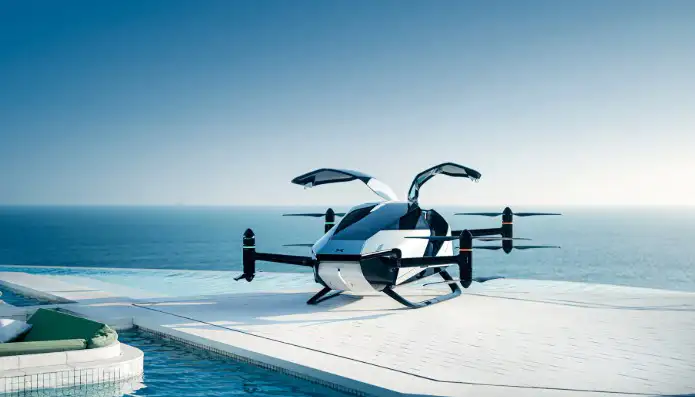
AviationNews – The Chinese electric vehicle manufacturer XPENG intends to initiate large-scale production of its flying cars by 2027, following a surge of more than 7,000 pre-orders. President Brian Gu recently announced the timeline, marking a significant milestone in the company’s transition from road vehicles to advanced aerial mobility.
The majority of current orders originate from China, where the company is actively pursuing final flight certifications from national aviation regulators. Despite its rapid rise as a global automotive player, only 15% of XPENG’s revenue currently comes from international sales. However, the firm maintains aggressive expansion goals, aiming to generate over half of its income from foreign markets within the next decade through strategic alliances, such as its existing partnership with Volkswagen.
These eVTOL (electric vertical take-off and landing) vehicles are designed to function like oversized drones, capable of transporting multiple passengers over short distances. The development process has not been without hurdles; last year, two prototypes collided during a rehearsal in Changchun, resulting in a fire upon landing. Beyond the skies, XPENG is also diversifying into humanoid robots intended for service roles in retail and corporate environments, with manufacturing scheduled to begin as early as late this year.
“There will be more applications for humanoid robots in our lives,” stated Brian Gu, suggesting that the robotics division could eventually surpass the company’s traditional automotive business in size and scope over the next twenty years.
This shift signals a future where urban transport is no longer confined to the ground and where artificial intelligence plays a physical role in daily commerce. As XPENG prepares for early deliveries by the end of this year, the industry will be watching closely to see if these innovations can successfully scale into a mainstream commercial reality.
By integrating flight technology and robotics, XPENG is positioning itself as a multifaceted technology leader. If the company achieves its production targets and secures international trust, it could fundamentally alter how we perceive both personal travel and professional service automation.