viation News –
Russia has dramatically scaled its unmanned air vehicle (UAV) production at the Yelabuga special economic zone, expanding from just two buildings in 2021 to a massive complex of 116 structures. This industrial surge, confirmed by satellite imagery analysis from the Center for Strategic and International Studies (CSIS), marks a pivotal shift in Moscow’s ability to sustain long-range strikes in the ongoing conflict in Ukraine.
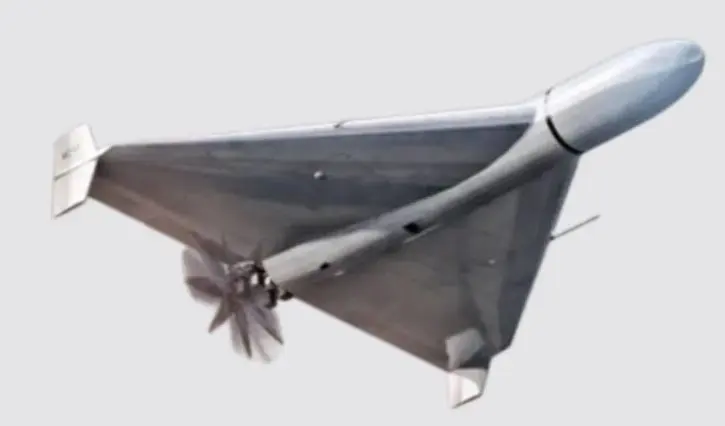
The Yelabuga Special Economic Zone (SEZ), also known as Alabuga, has transitioned from a developing industrial park into a high-capacity military arsenal. Since the 2022 invasion of Ukraine, the site has become the primary hub for the assembly and manufacturing of Iranian-derived Geran-2 drones. This growth was fueled by a bilateral agreement between Moscow and Tehran, which provided the technical blueprints and initial kits required to jump-start domestic Russian production.
Recent intelligence suggests the facility is no longer merely assembling parts but has moved toward full-scale industrialization. The expansion includes not only manufacturing workshops but also specialized testing grounds and housing for thousands of workers, including students from the local Alabuga Polytechnical College. The site’s location, approximately 1,100 kilometers east of the Ukrainian border, provides a strategic buffer against most tactical aerial threats while remaining integrated into Russia’s logistics network.
The Geran-2 loitering munitions produced at the site utilize a simplified, cost-effective design that allows for mass deployment to overwhelm air defense systems. By replacing expensive precision missiles with these high-volume UAVs, Russia maintains a continuous operational impact on Ukrainian infrastructure. The transition to 116 structures indicates a sophisticated division of labor, with dedicated buildings for carbon fiber airframe molding, engine testing, and electronics integration.