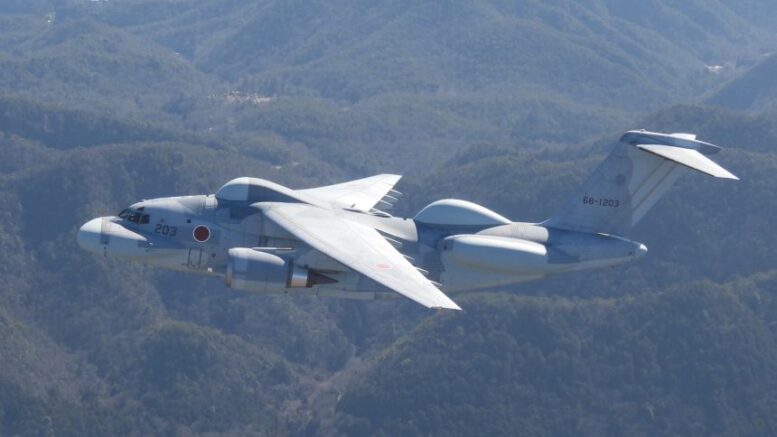
Aviation News – Japan has officially commenced flight testing for its new EC-2 Stand-Off Jammer aircraft, a specialized electronic warfare platform designed to neutralize enemy sensors from a distance. The aircraft successfully completed its first flight on March 17, 2026, marking a critical milestone in the modernization of the Japan Air Self-Defense Force’s electronic combat capabilities.
The development of the EC-2 follows in the footsteps of its predecessor, the EC-1, which also featured a distinct silhouette. This latest iteration, based on a modified transport airframe, was developed to address the growing need for sophisticated electronic countermeasures in increasingly contested regional airspace. The project has moved into the testing phase as Japan seeks to bolster its Stand-Off capabilities, allowing it to disrupt hostile radar and communications while remaining outside the range of immediate threats.
Aviation enthusiasts and industry observers have closely followed the aircraft’s progress, primarily due to its striking and unusual appearance. The airframe is covered in massive, bulbous fairings that house advanced electronic equipment, leading many to revive the “Platypus” nickname or debate its standing as one of the world’s most unconventional-looking aircraft. Despite the aesthetic discussions, the strategic value of the platform remains the primary focus for the Japanese Ministry of Defense.
The EC-2 functions as a high-powered electronic warfare hub, utilizing its specialized internal systems to emit interference signals that “blind” enemy radar. This operational impact is significant, as it provides a protective umbrella for friendly aircraft during complex missions. By mounting these systems on a larger platform, the EC-2 can carry more powerful transmitters and stay airborne longer than smaller carrier-based jammers, ensuring persistent signal dominance over the battlefield.