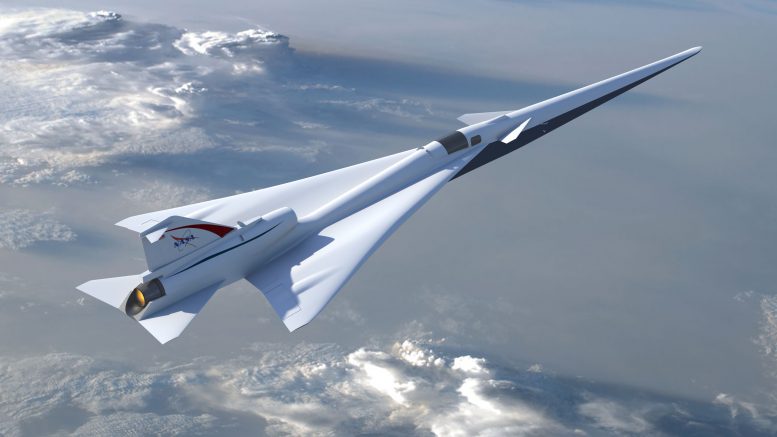
AviationNews – NASA’s experimental X-59 QueSST successfully completed its maiden flight today from Palmdale, California, marking a critical milestone in global efforts to lift the decades-old ban on supersonic flight over land. The aircraft, designed to demonstrate technology that drastically reduces the sonic boom, aims to bring back the era of ultra-fast commercial air travel.
The test flight was successfully conducted on October 28, 2025, after some earlier attempts had been postponed. The unique-looking aircraft, known as the Quiet SuperSonic Technology (QueSST) demonstrator, was designed and built by Lockheed Martin’s Skunk Works at the Air Force Plant 42 facility. Its primary mission is to gather crucial data to inform new global regulatory standards for commercial supersonic jets.
The operational and technical highlight of the X-59 is its revolutionary shape, specifically engineered to change how shockwaves are generated and perceived on the ground. Instead of the loud, disruptive sonic boom—which led to the current ban—the aircraft is designed to generate only a quiet “sonic thud” or “soft sonic boom.” This is achieved using a long, tapered nose and canards that manage the air pressure waves, making supersonic travel over populated areas viable.
A spokesperson for NASA’s Commercial Supersonic Technology project stated: “The X-59 is not just an airplane; it is a scientific instrument designed to prove that the boom barrier can be overcome. This first flight is the vital first step toward opening the skies for a new generation of swift, quiet air travel.”
The successful maiden flight immediately shifts the program toward extensive flight testing over various U.S. communities. The data collected on the perceived sound levels will be presented to the Federal Aviation Administration (FAA) and international regulatory bodies. If the X-59 proves it can consistently deliver a quiet sonic signature, the long-standing ban on overland supersonic flight could finally be revised, allowing faster travel across continents.


