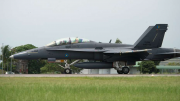
AviationNews – A NATO AWACS surveillance jet was forced to execute a precautionary landing at the Geilenkirchen Air Base in Germany yesterday evening around 19:00 local time, following a technical anomaly involving the nose landing gear. The incident, which prompted a full alert at the NATO base and the precautionary mobilization of emergency services across the nearby Dutch border, highlights the operational vigilance required for the alliance’s aging fleet.
The aircraft, identified as a NATO E-3A Sentry belonging to the Airborne Warning and Control System fleet, was returning from a surveillance mission in Northern Germany when the crew reported the technical issue. A spokesperson confirmed the problem was related to the front landing gear, specifically suggesting it might have been a false indication in the cockpit rather than a catastrophic system failure. Nevertheless, the situation mandated the immediate activation of all emergency protocols.
A malfunction involving the landing gear indicator forces a crew to treat the situation as a major emergency, as they cannot confirm the aircraft’s ability to land safely. While initial media reports speculated about a complete hydraulic failure, the core issue was focused on the deployment status of the nose gear. The crew’s swift and cautious response, coupled with the aircraft’s redundant systems, ensured the plane touched down safely at the multinational base, which is situated close to the Dutch town of Schinveld.
“The crew successfully managed a critical indicator issue and landed the aircraft safely,” a source familiar with NATO operations stated. “The alert at nearby facilities, including Maastricht Aachen Airport, was a standard, necessary precaution to prepare for all contingencies, ensuring maximum safety for the crew and the local population.”
The E-3A AWACS fleet, a critical asset for NATO’s surveillance and command capabilities, is a modified Boeing 707 platform nearing the end of its projected service life. This incident will trigger a detailed investigation into the landing gear’s sensor or system. While the aircraft landed safely, the event underscores the necessity of continuous investment in modernization programs to maintain the reliability of these essential airborne early warning assets until their scheduled replacement in the 2030s.
The quick and safe resolution of the landing, thanks to the crew’s training and the activation of cross-border emergency protocols, confirms operational safety procedures are robust. However, the nature of the fault points to the ongoing challenges in operating and maintaining the aging technological infrastructure of NATO’s pivotal surveillance fleet.