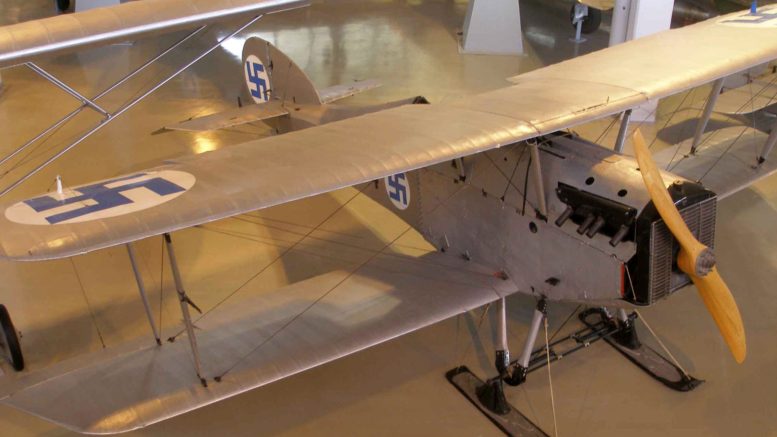
Aviation News – The Finnish Air Force announced it will remove the swastika from certain unit flags, distancing itself from the symbol’s Nazi-era associations.
The decision comes after years of debate over the emblem’s visibility in modern military insignia. While the swastika had historical use in Finland before World War II, its connection to Nazi Germany overshadowed that legacy. The change marks a significant shift in how the Finnish military presents its identity in 2025.
Key improvements include:
- Removal of a symbol strongly tied to extremist ideology
- Alignment with international norms and sensitivities
- Clearer distinction between Finland’s heritage and Nazi history
- Modernization of military symbols for a global audience
The move involves redesigning unit flags while maintaining traditional Finnish military colors and iconography. Operationally, the change does not affect the Air Force’s activities but strengthens its international reputation and cooperation with allies.
For museum aircraft and historical artifacts, things are handled differently:
-
Preservation of history: Aircraft displayed in museums that still carry the swastika for historical accuracy are generally not repainted. They remain as-is to show the authentic markings of the period.
-
Educational framing: Museums typically add contextual signage explaining that the Finnish swastika predates Nazi Germany (it was adopted in 1918) and is unrelated to Hitler’s regime. This helps visitors understand the difference.
-
No operational use: The distinction is clear — the Air Force will stop using the swastika in active symbolism, but historical artifacts remain unchanged to preserve heritage.
-
International precedent: This is similar to how WWII-era German aircraft or vehicles are displayed in museums worldwide with their original markings, but framed in a historical context.
Photo Rob Vogelaar