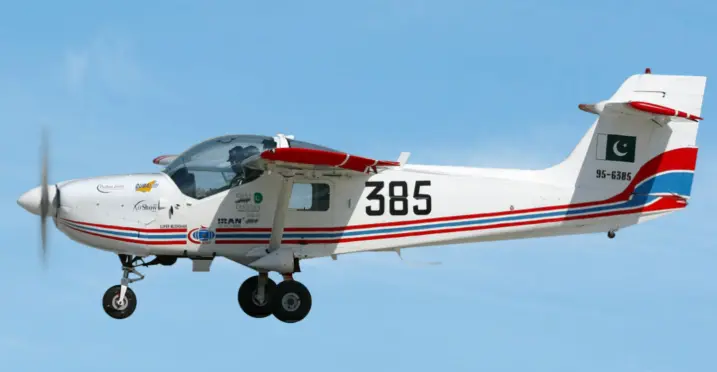
AviationNews – A Pakistan Army Aviation PAC MFI-17 Mushshak training aircraft crashed near Quetta on Monday following a sudden technical malfunction, killing both military aviators on board. The fatal accident claimed the lives of an instructor pilot and a trainee officer during a routine instructional sortie in southwestern Balochistan.
The aircraft came down around midday in the Nawan Killi area on the outskirts of the provincial capital, resulting in the total destruction of the airframe upon impact. Military authorities identified the fallen aviators as flight instructor Major Husnain Shehzad Humayun and student pilot Captain Abdul Samad. Pakistan’s military leadership and state officials, including President Asif Ali Zardari and Prime Minister Shehbaz Sharif, promptly extended national condolences to the families of both officers as emergency teams cordoned off the crash site.
Manufactured domestically by the Pakistan Aeronautical Complex (PAC) Kamra based on the Saab Safari/Supporter design, the MFI-17 Mushshak serves as the primary basic flight trainer for the Pakistani Armed Forces. The robust, piston-engine light aircraft features dual side-by-side seating and fixed landing gear, providing entry-level screening, instrument flight, and aerobatic handling for army and air force cadet pilots. The loss of the airframe underscores the inherent risks associated with military flight training curricula operating in demanding high-altitude valley environments like Quetta.
“A Mushshak training aircraft of Pakistan Army Aviation crashed near Nawan Killi, Quetta, due to a technical fault,” the military’s media wing, Inter-Services Public Relations (ISPR), confirmed in an official statement. “Both pilots on board, Major Husnain Shehzad Humayun and Captain Abdul Samad, embraced martyrdom in the incident.”
A formal board of inquiry will investigate the exact nature of the mechanical failure to prevent recurring maintenance vulnerabilities across the primary training fleet. Military aviation commands typically review maintenance logs and enforce targeted ground inspections on related engine and control systems following in-flight system failures.
The tragic loss in Balochistan highlights the continuing operational hazards faced during military aviation training missions. Investigators will now focus on flight data and wreckage forensics to determine the precise technical fault that brought down the trainer aircraft.