Aviation News – The Bayraktar TB3 Unmanned Combat Aerial Vehicle (UCAV) successfully launched two sonobuoys using the indigenously developed Baykar SAS POD during the Seawolf-I/2026 Exercise, expanding its anti-submarine warfare (ASW) toolkit.
Taking off directly from the short runway of the amphibious assault ship TCG Anadolu, the carrier-capable drone demonstrated critical anti-submarine operations in a joint flight mission alongside a maritime patrol aircraft. The multi-domain drill took place across four key maritime domains—the Black Sea, the Sea of Marmara, the Aegean Sea, and the Eastern Mediterranean—from September 20–25, 2026. Organized with broad operational participation from the Naval, Land, Air, and Coast Guard Commands, the exercise showcased Türkiye’s growing array of home-grown defense technologies, with the Bayraktar TB3 emerging as a central operational asset.
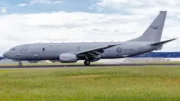
During the scenario-driven mission, the Bayraktar TB3 maintained continuous, real-time coordination with a maritime patrol aircraft operating in the target area. While airborne, the unmanned platform executed an airborne release of two acoustic detection sonobuoys into the sea using the SAS POD mounted beneath its wing. This joint operation demonstrated how uncrewed naval aviation platforms can seamlessly integrate with crewed airborne platforms to extend sub-surface tracking coverage across complex maritime sectors.
By deploying the Baykar SAS POD system, the Bayraktar TB3 dispenses specialized acoustic sensors directly onto target surface coordinates to detect, track, and analyze submerged submarine contacts. Utilizing long-endurance flight characteristics, the UCAV provides persistent tracking coverage over vital choke points without placing human crews in high-risk environments. This capability delivers a cost-effective acoustic detection mesh that relays critical underwater targeting intelligence to command units across the task force.
“Demonstrating live sonobuoy deployment from our carrier-capable Bayraktar TB3 highlights a transformative leap for our naval forces,” stated defense developer Baykar regarding the achievement. “By integrating advanced anti-submarine sensor pods onto uncrewed platforms, we are establishing a versatile operational framework that drastically expands surveillance ranges and strengthens maritime security.”
Looking ahead, integrating sonobuoy drop capabilities onto naval drones positions Türkiye at the forefront of modern multi-domain maritime warfare. Defense analysts anticipate that future operational concepts will combine uncrewed airborne sensor drops with automated acoustic processing nodes to shield naval fleets against subsurface threats.
The successful SAS POD deployment confirms that carrier-based drones can execute complex anti-submarine missions once limited to larger crewed aircraft. By combining short-takeoff carrier operations from TCG Anadolu with specialized underwater acoustic sensors, Baykar and the Turkish Naval Forces have broadened the tactical scope of maritime defense. This milestone cements the Bayraktar TB3 as a multi-role naval asset capable of handling anti-surface, reconnaissance, and anti-submarine missions in contested waters.