AviationNews – Airbus Helicopters has launched a comprehensive new defense strategy designed to reshape military and disaster relief operations through multi-domain integration and uncrewed aerial systems. As global security threats intensify and diversify, this strategic pivot aims to secure European autonomy by transforming traditional rotorcraft into advanced, airborne command hubs.
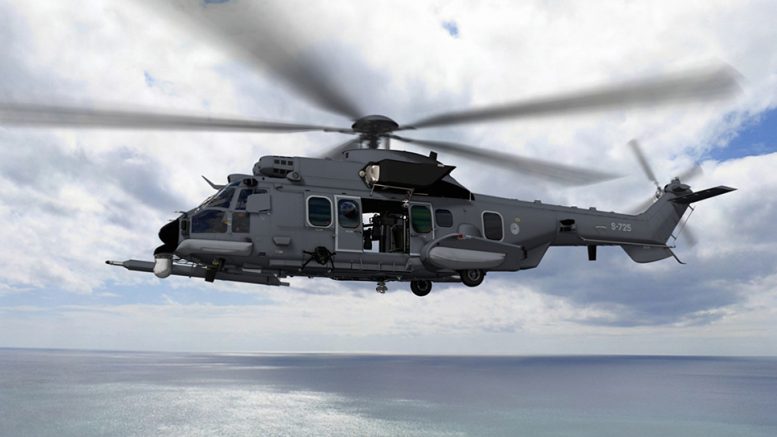
Driven by rising geopolitical conflicts and escalating climate-related disasters, the European aerospace leader is actively moving away from isolated aircraft platforms. Industry dynamics show that modern warfare increasingly relies on hybrid tactics and uncrewed aerial systems (UAS). To address these shifting paradigms, Airbus is leveraging its proprietary HForce system alongside highly flexible platforms like the H145M and H225M, allowing operators to pivot rapidly between light attack, tactical transport, and firefighting missions.
At the core of this technological evolution is HTeaming, a sophisticated solution that pairs manned helicopters with tactical drones such as the VSR700 and Flexrotor. This framework enables collaborative teaming, allowing manned aircraft to serve as central command systems for drone swarms during high-risk intelligence, surveillance, and reconnaissance (ISR) missions. By launching advanced effectors directly from the helicopter, military operators can acquire targets and strike from extended ranges, significantly increasing battlefield survivability.
“In an era of unpredictability, the helicopter remains a dependable tool of flexibility,” stated Mathilde Royer, Executive Vice President of Strategy and Sustainability at Airbus Helicopters. “Through our leadership in the European-funded ENGRT project, we are maturing the critical technologies—such as modular open systems and advanced connectivity—necessary for future military rotorcraft.”
Looking ahead, Airbus intends to spearhead the Next-Generation Rotorcraft (NGRC) initiative to guarantee defense capabilities built and sustained entirely within Europe. Defense sectors and NATO nations must now prioritize these integrated ecosystems over non-European platforms to counter evolving threats effectively. Embracing this vertical innovation will safeguard industrial independence and ensure absolute mission readiness in contested environments.
Ultimately, the shift toward integrated airborne hubs redefines the role of vertical lift assets in modern conflict. While the nature of the battlefield continues to evolve, modularity and drone collaboration ensure that these aircraft remain indispensable. The long-term success of these sovereign European platforms will heavily dictate the region’s strategic readiness and defense autonomy for decades to come.