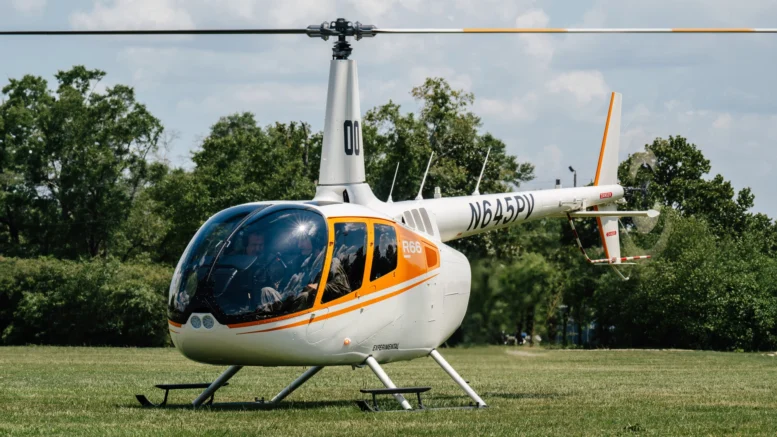
Aviation News – Lockheed Martin has advanced to Phase III of the U.S. Army’s Flight School Next competition, selecting Robinson Helicopter’s R66 NxG as its new training aircraft, a move aimed at modernizing how future Army aviators are trained and accelerating readiness.
The Army’s selection keeps Lockheed Martin in contention to serve as the prime systems integrator for the Initial Entry Rotary-Wing program, responsible for designing, delivering and operating the entire training enterprise. Announced this week, the Phase III progression positions the defense contractor to refine its full training architecture while Robinson Helicopter Company supplies a fleet of upgraded R66 NxG helicopters, along with spare parts, technical support and dedicated services, as part of the development effort.
Under the proposal, Lockheed Martin would manage everything from performance monitoring and supply-chain logistics to advanced modeling and simulation tools that blend live-flight instruction with synthetic training. The single-engine R66 NxG, based on Robinson’s proven civil platform, introduces modern avionics and reliability upgrades intended to lower operating costs and provide student pilots with a practical, responsive aircraft suited to early rotary-wing instruction.
“We are grateful for the Army’s confidence in our Flight School Next solution to move on to Phase III,” said Todd Morar, vice president of Air and Commercial Solutions at Lockheed Martin. “For years we have been refining a comprehensive solution that aligns with the Army’s vision for a modern, affordable and high-quality training pipeline that will produce fundamentally better aviators.”
If selected for full deployment, the program could reshape the Army’s pilot training model by bolting together commercial-grade helicopters, digital simulation and integrated logistics into a single streamlined system. The approach aims to cut costs, increase throughput and prepare students more quickly for advanced platforms and operational units.
With Phase III testing and evaluation underway, the Army will assess performance, scalability and affordability before making a final decision. For Lockheed Martin and Robinson, the partnership marks a step toward redefining how the next generation of Army helicopter pilots takes flight, blending proven hardware with a digitally enabled training ecosystem.