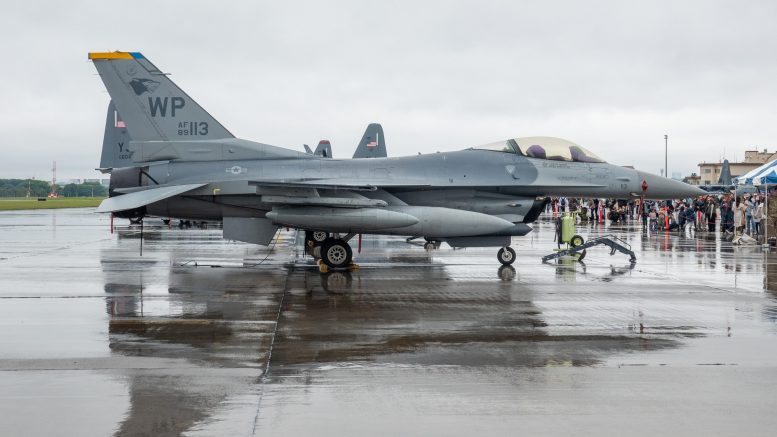
Aviation News – The U.S. Air Force has begun relocating F-16 Fighting Falcons from Kunsan Air Base to Osan Air Base as part of preparations for Phase II of the ongoing Super Squadron Test. The first aircraft arrived on July 28, marking a significant milestone in the initiative aimed at enhancing combat power and operational efficiency on the Korean Peninsula.
Approximately 31 F-16s and 1,000 Airmen will complete the move by October 2025, when Phase II formally begins. This next stage builds upon lessons from Phase I, which launched in October 2024 with nine F-16s and 150 Airmen supporting the 36th Fighter Squadron at Osan AB.
The Super Squadron Test is a multi-phase evaluation effort led by the U.S. Air Force’s Seventh Air Force, intended to assess whether consolidating more aircraft and personnel into a single location can lead to increased combat effectiveness, streamlined logistics, and improved response times across the Indo-Pacific region. The test directly supports the U.S. Department of Defense’s Agile Combat Employment (ACE) concept by testing how rapidly forces can adapt to dynamic mission demands.
With Phase II ramping up, the relocation of 31 F-16s and around 1,000 personnel from Kunsan AB represents a major force realignment that will stress-test maintenance capabilities, aircrew proficiency, and integrated logistics on a broader scale. This phase will continue through October 2026.
The 51st Fighter Wing at Osan AB has been tasked with not only absorbing the additional aircraft but also integrating them seamlessly into its daily operations. This includes expanding sortie generation capacity, adjusting sustainment resources, and enhancing interoperability with both U.S. and South Korean units.
Maintenance crews already stationed at Osan are now working side-by-side with the 36th Fighter Generation Squadron (FGS) to gain hands-on experience with the newly arrived F-16s, ensuring continuity of operations and reducing transition friction.
Meanwhile, the Republic of Korea Air Force (ROKAF) continues to participate closely in combined training, which will now benefit from greater U.S. fighter presence at Osan, bolstering deterrence and interoperability across the peninsula.
Photo Jeroen Vogelaar


