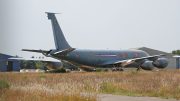
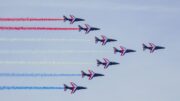
Aviation News – France has launched the first phase of Pégase 2026, deploying Rafale fighter jets, A330 MRTT Phénix tankers and A400M Atlas transport aircraft from France to Alaska via Greenland and Canada. The mission strengthens France’s ability to project air power over long distances and supports a developing route towards the Indo-Pacific.
The first A400M departed Orléans Air Base 123 on September 7 for Kangerlussuaq, Greenland, completing the flight in almost six hours. After a technical stop, the aircraft continued the following day to Pituffik Space Base before flying on to Eielson Air Force Base in Alaska.
On September 8, four Rafale fighters, five A330 MRTT Phénix aircraft and a second A400M departed Istres Air Base 125. The aircraft coordinated in flight with the first A400M, allowing the formation to regroup and continue together towards Alaska. The second A400M followed a different route through Kangerlussuaq and Goose Bay, Canada, before continuing to Alaska.
The deployment demonstrates the ability of the French Air and Space Force to conduct long-range operations across demanding Arctic routes. The Rafale fighters required six in-flight refuelling operations to reach Eielson after an approximately 11-hour flight, highlighting the importance of tanker aircraft in extending fighter range and maintaining operational flexibility.
The mission underlines the strategic value France places on long-distance air projection and international cooperation. The combination of Rafale, A330 MRTT and A400M aircraft provides the flexibility needed to move combat aircraft, personnel and equipment across thousands of kilometres while sustaining operations far from French territory.
Pégase 2026 also provides an important opportunity to strengthen the Arctic route through Greenland and Canada, creating additional options for future deployments. The experience gained during the mission can contribute to France’s wider ability to project air power towards the Indo-Pacific and other distant regions.
The first stage of Pégase 2026 demonstrates that French air power can operate across extreme distances while relying on a carefully coordinated network of aircraft and international staging points. The Arctic deployment also highlights the growing strategic importance of northern air routes. Further phases of the mission will provide additional insight into France’s long-range operational capabilities.