Aviation News – Joby Aviation, Inc. has successfully completed the first-ever autonomous flight across the United States, utilizing an aircraft retrofitted with its proprietary autonomy technology. The pioneering journey spanned 3,199 miles without a single control input from its onboard safety pilot, concluding its eastbound flight leg near the iconic site of the Wright brothers’ historic flight in North Carolina’s Outer Banks.
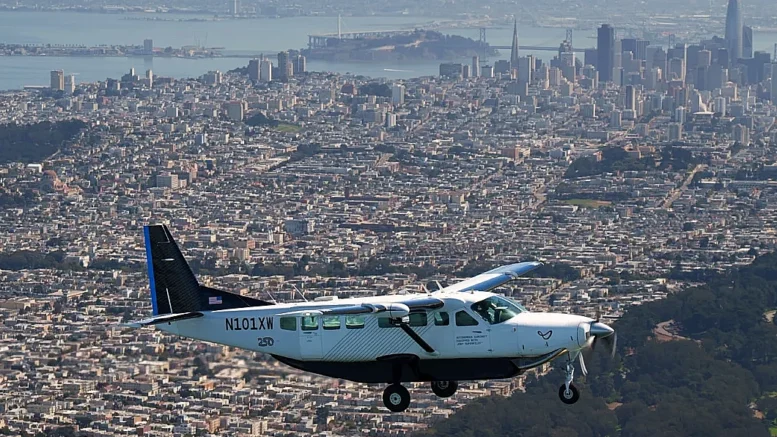
The historic mission relied on a modified Cessna Caravan airframe retrofitted with advanced autonomous flight controls. Operating under remote supervision from Joby’s Autonomy Headquarters in California and Shaw Air Force Base in South Carolina—located up to 2,323 miles away—the aircraft executed all phase-of-flight operations, including autonomous taxiing, takeoffs, route navigation, and precision landings. The month-long coast-to-coast tour showcased the operational readiness of the system across commercial freight, defense logistics, disaster response, and medical transport frameworks.
By integrating software-driven autonomy technology onto a FAA-certified aircraft model, Joby Aviation highlights a practical, cost-effective avenue to rapidly scale automated cargo and passenger transport. During the transcontinental flight, the aircraft proved its ability to safely navigate high-density airspace, including seamless maneuvers through Phoenix Deer Valley Airport, while autonomously calculating real-time rerouting around severe weather patterns and thunderstorms.
The underlying flight software continuously processes sensor telemetry to perform real-time navigation and collision avoidance without requiring pre-existing airport familiarity. This operational adaptability allows the aircraft to function inside congested civilian airspace while being monitored remotely via extended data links, drastically reducing pilot workload while expanding global airlift capacity.
“By integrating our autonomy system onto an already-certified airframe, we are offering a scalable, real-world pathway toward fully automated air logistics and dual-use operations across both commercial and defense sectors,” stated Joby Aviation leadership following the landmark transcontinental milestone.
This transcontinental milestone accelerates the integration of autonomous systems into civil and military logistics networks worldwide. As regulatory frameworks evolve, air cargo operators and defense agencies will increasingly deploy autonomous airframes to optimize long-range routes, lower operational overhead, and maintain supply line efficiency in complex environments.
Joby Aviation has set a transformative precedent by proving that pilotless aircraft can safely navigate high-density civilian corridors and unpredictable weather patterns over long distances. The successful cross-country voyage provides a definitive roadmap for the future of automated logistics, medical supply transport, and defense mobility. Moving forward, industry adopters will monitor subsequent flight trials as autonomous aviation transitions from experimental testing into everyday commercial reality.