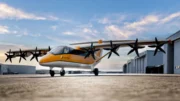
Aviation News – Eve Air Mobility and Moov have signed a Letter of Intent to deploy up to 30 electric vertical take-off and landing aircraft to explore advanced air mobility opportunities in Cabo Verde and Europe. This strategic initiative intends to transform regional transit and expand eco-friendly tourism across the African archipelago.
The agreement establishes a partnership focused on evaluating how zero-emission aircraft can integrate into existing transportation networks. Under the framework, Eve Air Mobility and Moov will assess several high-potential use cases across major islands, including São Vicente, Santo Antão, Sal, Praia, and Boa Vista. Beyond traditional passenger transport, the parties plan to explore medical transport services and remote infrastructure inspections.
This development coincides with a massive expansion in the regional economy, driven largely by a surging hospitality sector. According to data from the World Bank, tourist arrivals in Cabo Verde jumped 16.5% year-over-year, reaching an estimated 1.18 million visitors. As the archipelago continually invests in connectivity, both companies view this selection as a prime opportunity to enhance visitor infrastructure and alleviate traditional transit bottlenecks.
The specialized aircraft operate utilizing electric rotors for vertical lift and fixed wings for cruise flight. This specific “lift-and-cruise” engineering configuration minimizes operational noise footprints and ensures zero carbon emissions. By avoiding the need for traditional runways, these vehicles can seamlessly link airports, marine ports, and remote island resorts, greatly reducing travel times between fragmented island geographies.
”This collaboration is a significant step forward for Urban Air Mobility,” stated an executive representative during a previous company expansion announcement. “By leveraging proven technology and a robust certification process, our partners gain a powerful platform to deliver efficient, sustainable air travel in high-demand markets.”
The successful implementation of this air network will provide a blueprint for sustainable transportation in island nations worldwide. As infrastructure modeling progresses, the collaboration will pave the way for regular inter-island shuttle services. Ultimately, this initiative positions Cabo Verde as a pioneer in advanced air mobility, proving that next-generation aviation can drive economic growth while protecting fragile ecosystems.