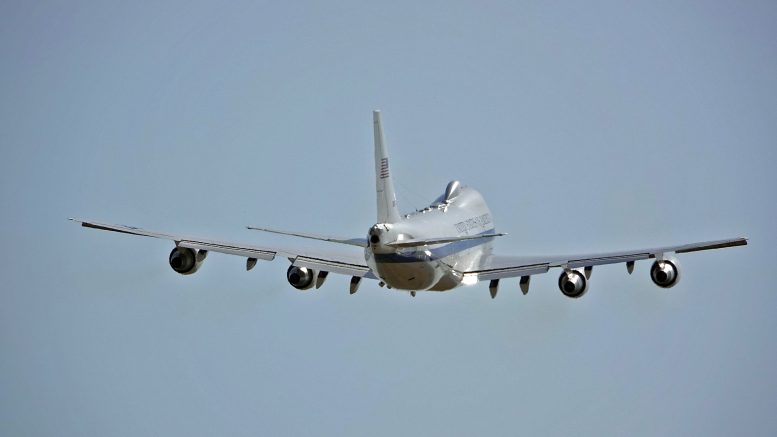
The US Air Force has awarded Strategic Mission Systems LLC a massive, sole-source contract worth up to $984 million to sustain and modernize its fleet of E-4B Nightwatch aircraft. This critical deal ensures that the military’s vital airborne command hubs remain fully operational and equipped with cutting-edge communication technology during national emergencies.
The indefinite-delivery/indefinite-quantity contract establishes a long-term partnership to protect the backbone of American strategic defense. Formally announced by the Department of Defense, the sweeping modernization effort will take place across multiple strategic hubs, including Oklahoma City, Oklahoma; San Antonio, Texas; and Offutt Air Force Base in Nebraska. Engineers and defense technicians will work continuously on the fleet, with the entire program scheduled for completion by June 24, 2037.
Commonly known as the “Doomsday Plane,” the E-4B serves as a highly survivable, mobile Airborne Operations Center designed to withstand the electromagnetic pulse from a nuclear blast. The technical core of this contract focuses on upgrading the aircraft’s complex mission systems, ensuring that the President, the Secretary of Defense, and the Joint Chiefs of Staff can maintain secure, uninterrupted global communications with US nuclear and conventional forces under the most extreme conditions.
“Maintaining a resilient, unjammable communications network is paramount to our national defense posture,” noted a defense acquisition official during the program briefing. “This comprehensive modernization program guarantees that our strategic command capabilities remain unmatched, resilient, and ready to deploy at a moment’s notice anywhere in the world.”
The 11-year commitment safeguards American aerospace readiness well into the next decade as the Air Force bridges the gap toward future command-and-control platforms. Defense analysts expect this upgrade cycle to significantly boost fleet availability while lowering long-term maintenance overhead.
The $984 million agreement firmly secures the operational lifespan of the critical E-4B fleet for the foreseeable future. By upgrading the core communication systems, the military ensures that its national command authority can direct global operations under any threat scenario. This strategic investment guarantees that the ultimate airborne safeguard remains robustly prepared until its final sunset in 2037.