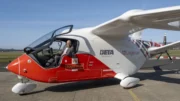
AviationNews – BETA Technologies, Surf Air Mobility, and Hawaiian Airlines have commenced a landmark test program in Hawaiʻi using the all-electric Alia CTOL aircraft. This six to eight-week trial actively gathers vital data on the infrastructure, economic feasibility, and operational requirements needed to scale commercial electric flights across the islands.
Initiated in late June 2026 at the Daniel K. Inouye International Airport in Honolulu, the partnership merges BETA’s advanced aerospace technology with Surf Air Mobility’s regional operations via Mokulele Airlines. Hawaiian Airlines contributes by sharing logistical insights on inter-island cargo and passenger routes while facilitating community engagement. The short overwater distances and established demand for regional transit make the Hawaiian archipelago an ideal, real-world environment for evaluating electric aviation at a commercial level.
The Alia CTOL (conventional take-off and landing) is a fixed-wing, battery-powered aircraft driven by a single electric motor and a five-blade pusher propeller. It carries up to five passengers or 200 cubic feet of cargo, featuring a maximum range of 387 miles and a top speed of 176 mph. Because it fully recharges in under an hour using dedicated ground infrastructure, operators can maintain the rapid turnaround times required for high-frequency flights while entirely eliminating aviation fuel emissions.
“Connecting the Hawaiian islands with low-cost cargo and passenger service is a great application for electric advanced air mobility,” a spokesperson for the partnership stated regarding the launch. “These early demonstrations will showcase the utility and economics of the BETA ALIA aircraft firsthand to Surf Air and inform future high cadence, sustainable intraisland service.”
Following anticipated FAA certification, Surf Air Mobility plans to integrate BETA aircraft throughout its Hawaiʻi network for scheduled passenger and cargo missions. To support this fleet integration, the company is preparing to build a dedicated Maintenance, Repair, and Overhaul (MRO) facility in Hawaiʻi, acting as the exclusive factory-authorized service center. This strategic move establishes the technical foundation necessary to scale commercial electric aviation locally and provides a strong blueprint for other short-haul air networks globally.
In summary, this collaborative flight campaign represents a major milestone toward decarbonizing regional air travel. By evaluating electric aircraft performance in an active commercial network, BETA and its partners actively pave the way for a cleaner, quieter, and highly efficient future for inter-island transportation.