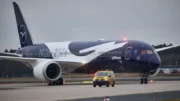
Aviation News – Swiss International Air Lines has announced that two of its Airbus A220-100 passenger jets will be completely dismantled and never return to commercial flight. This severe measure escalates a previous fleet-parking strategy as the carrier aggressively hunts for hard-to-find components to shield its larger aircraft from a global supply chain crisis.
The radical decision marks a dark turning point for the carrier’s short-haul operations, following a temporary grounding phase implemented in October 2025. During that initial move, airline executives chose to park the majority of the carrier’s smaller A220-100 variant to use them as structural donors for the active fleet. Persistent deficits in replacement hardware have now forced the airline to permanently sacrifice two of those parked airframes, moving them from temporary storage into a total teardown process.
As the historic launch customer for the aircraft family—originally developed and marketed as the Bombardier CSeries—the airline holds a foundational role in the history of the program. Over the last decade, the carrier integrated a total of nine smaller -100 models alongside 21 of the stretched Airbus A220-300 variant into its European network. When chronic maintenance bottlenecks began paralyzing flight lines, managers prioritized the protection of the larger -300 models because their higher seating capacities deliver far superior operating economics per flight.
The driving force behind this severe fleet reduction stems from widespread manufacturing and reliability faults in the aircraft’s Pratt & Whitney Geared Turbofan (GTF) engines. A severe shortage of backup powerplants and critical internal engine parts has left operators unable to complete routine overhauls or fix unscheduled mechanical issues at normal service intervals. By completely dismantling the two selected airframes, ground teams can salvage valuable computerized avionics, landing gear components, and localized engine systems to maximize the flight availability of the remaining fleet.
“By dismantling these two aircraft, we are specifically securing components for our own use to maintain high schedule reliability across our network,” stated an airline operations representative.
The decision highlights a structural shift in how international airlines manage modern aircraft maintenance when global supply lines fracture. Analysts predict that more operators may resort to targeted fleet cannibalization if engine production facilities fail to catch up with global repair demands.
The loss of these two passenger jets permanently shrinks the airline’s original launch-model sub-fleet down to seven units. Ground teams will begin the systematic teardown immediately to funnel parts directly into maintenance hubs. This aggressive parts-harvesting strategy ensures that the strategically vital A220-300 fleet remains fully operational throughout the busy upcoming travel seasons.