Aviation News – An AH-64E Apache attack helicopter has successfully deployed a rocket-powered Altius 700 drone for the first time during a military exercise at Yuma Proving Ground. This milestone integration proves that “launched effects” can drastically extend the reach and safety of Army aviators in contested environments.
The demonstration took place during Concept Focused Warfighting Experiment 26 (CFWE26), involving specialized crews from the U.S. Army Combat Capabilities Development Command Aviation & Missile Center (DEVCOM AvMC). By successfully executing an airborne, rocket-powered launch, the team verified that the Apache—traditionally a direct-fire platform—can now act as a mother ship for sophisticated unmanned systems. This development follows years of research into “launched effects,” aimed at keeping pilots out of the range of enemy air defenses.
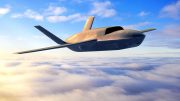
The Altius 700, developed by Anduril Industries, was selected for this integration due to its category-leading range and payload capacity. During the experiment, the focus remained on how the combined versatility of the Apache and the sensing capabilities of the drone could provide real-time intelligence. The test marks a shift in U.S. Army doctrine, moving toward a “system of systems” approach where manned and unmanned platforms operate in tandem.
Technically, the launched effect works by ejecting from the helicopter and utilizing a rocket motor to reach cruising speeds before transitioning to flight. This operational impact is massive: it allows the Apache to stay behind cover while the Altius 700 flies miles ahead to identify targets or perform electronic warfare. This effectively expands the helicopter’s “sensing and lethality” envelope, allowing it to strike or scout without ever being seen by the adversary.