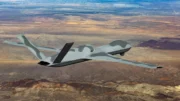
Aviation News – The U.S. Army has awarded General Atomics Aeronautical Systems, Inc. (GA-ASI) a contract to integrate enhanced Electronic Intelligence (ELINT) capabilities into the MQ-1C Gray Eagle Extended Range (ER) fleet. This strategic technical injection is designed to provide ground commanders with long-range sensing of enemy air defense systems, significantly improving the survivability of both uncrewed and crewed aircraft.
Announced on April 15, 2026, the contract builds upon the Army’s ongoing modernization of its uncrewed aircraft systems (UAS). The initiative focuses on upgrading the Gray Eagle ER, a platform that has become a staple of persistent surveillance and reconnaissance. To deliver this specialized capability, GA-ASI is collaborating with the Capability Program Executive Office for Intelligence and Spectrum Warfare and industry partner SNC to integrate advanced radar detection and signal collection technology.
The development comes as the U.S. military shifts its focus toward large-scale combat operations in electronically contested environments. By retrofitting existing airframes with advanced sensors, the Army can rapidly enhance its Integrated Air Defense System (IADS) sensing without the need for an entirely new platform. This modular approach ensures that the Gray Eagle ER remains a centerpiece of the Army’s Multi-Domain Operations (MDO) strategy.
Operational utility is at the heart of this upgrade, as the new ELINT sensors allow the aircraft to identify and geolocate critical threats from a safe distance. By operating outside of an adversary’s immediate weapon engagement zone, the Gray Eagle ER can look “deep” into the battlespace to relay real-time data to ground units. Furthermore, this data supports manned-unmanned teaming (MUM-T), providing crewed helicopters and jets with the early warnings necessary to avoid or neutralize hostile air defenses.
“Combining long-range detection with the range and persistence of the Gray Eagle platforms ensures that commanders always know when an adversary IADS is operating,” said David R. Alexander, President of GA-ASI. He further noted that the platform’s open systems architecture makes this a “simple but impactful upgrade” for the force.
The future of Army Aviation rests on the ability of platforms like the Gray Eagle to adapt to evolving electronic threats. As these upgraded units are fielded, they will provide a more comprehensive electronic order of battle, allowing for safer and more effective maneuvers in high-threat theaters like the Indo-Pacific. Commanders are now encouraged to leverage these persistent “deep sensing” assets to maintain a decisive informational advantage over near-peer competitors.