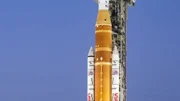
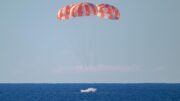
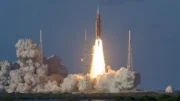
Astronauts aboard NASA’s Artemis II mission have flown deeper into space than any humans before, completing a rare flyby of the Moon’s far side and directly observing meteor impacts, marking a significant milestone for human space exploration.
During a six-hour survey of the Moon’s hidden hemisphere, the four-person crew from NASA conducted visual observations of the heavily cratered surface, an area rarely seen directly by humans. The mission, part of the broader Artemis program aimed at returning humans to the lunar surface, represents a critical step following decades since crewed missions last ventured beyond low Earth orbit.
The astronauts reported seeing multiple “impact flashes” — brief bursts of light caused by meteors striking the lunar surface. These observations provide valuable real-time insight into the frequency and intensity of cosmic bombardment on the Moon, where the lack of atmosphere leaves it fully exposed to space debris. Such data is essential for assessing risks to future lunar infrastructure and crewed missions.
A NASA spokesperson said the observations underscore the mission’s importance: “This flyby is not only a demonstration of deep-space capability, but also a chance to better understand the dynamic environment around the Moon, which will directly inform how we protect astronauts and equipment on future missions.”
Looking ahead, the findings from Artemis II are expected to support upcoming missions, including planned lunar landings and the development of long-term human presence on the Moon. The data collected will help refine safety protocols and engineering requirements for habitats and spacecraft operating in deep space.
The mission highlights a renewed era of exploration, combining human presence with advanced observation capabilities. As Artemis progresses, insights gained from this journey will shape the next generation of lunar exploration and pave the way for eventual missions to Mars.