Aviation News –
General Atomics Aeronautical Systems, Inc. (GA-ASI) and the U.S. Air Force have successfully completed a groundbreaking autonomy flight exercise, demonstrating critical new capabilities for Collaborative Combat Aircraft (CCA). The test proves that uncrewed jets can now coordinate complex combat behaviors autonomously, marking a major leap in the integration of AI-driven wingmen for future air warfare.
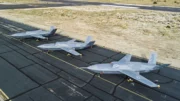
The demonstration, which took place on February 24, 2026, utilized a GA-ASI MQ-20 Avenger uncrewed jet as a primary testbed. This exercise integrated the latest government Autonomy Start Kit (ASK) and featured a tactical proliferated low-earth orbit data link, allowing the aircraft to maintain seamless communication during a large-scale force exercise.
Central to the mission was the use of GA-ASI’s TacACE (Tactical Autonomy Ecosystem). This sophisticated software environment allowed the MQ-20 to perform Infrared (IR) sensing with Single Ship Ranging (SSR), managed through the TacPad Pilot Vehicle Interface. These developments are part of a broader internal investment by GA-ASI to refine how autonomous systems interact with human pilots in contested environments.
Technically, the exercise highlighted the aircraft’s ability to track airborne threats without using active radar, which often gives away a plane’s position. By using an Infrared Search and Track (IRST) sensor, the MQ-20 Avenger can autonomously estimate a target’s range and location while remaining electronically silent. This creates a “stealthy sensor-to-shooter kill chain,” allowing the drone to detect and classify enemies in areas where electromagnetic emissions are strictly denied.
“Integrated within the TacACE’s modular skills library, SSR supports autonomous mission execution, cooperative targeting, and distributed kill chains, advancing the role of autonomous aircraft in future air combat and CCA operations,” said Mike Atwood, Vice President of Advanced Programs for GA-ASI. “This flight allowed internal investment to showcase GA-ASI’s capabilities.”
This successful test paves the way for a future where autonomous aircraft act as force multipliers, taking on high-risk sensing and targeting roles to keep human pilots out of harm’s way. As the military moves toward distributed kill chains, these passive sensing capabilities will become the standard for maintaining air superiority against advanced adversaries.
The collaboration between the U.S. Air Force and private industry continues to shorten the timeline for deploying reliable CCAs. With the MQ-20 proving it can operate effectively in complex, passive modes, the next phase of development will likely focus on scaling these autonomous behaviors across larger, multi-domain fleets.