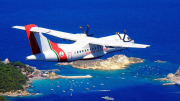
AviationNews – The global military landscape is witnessing a significant revival of amphibious aircraft, with the Japanese ShinMaywa US-2 and the Chinese AVIC AG600 emerging as the primary platforms for maritime security. As island disputes and search-and-rescue needs intensify, these versatile “flying boats” are once again becoming essential assets for modern naval forces worldwide.
The ShinMaywa US-2, operated by the Japan Maritime Self-Defense Force (JMSDF), currently stands as the most sophisticated operational seaplane, specifically engineered for high-stakes search-and-rescue (SAR) missions. Meanwhile, China has recently transitioned its massive AG600 Kunlong into mass production as of late 2025, aimed at bolstering its presence in the South China Sea. Additionally, Russia continues to deploy its jet-powered Beriev Be-200 for both maritime patrol and firefighting, highlighting a growing international market for high-capacity, water-capable aviation.
Technically, these aircraft utilize a specialized boat-hull fuselage and advanced boundary layer control systems to operate in rough sea states with waves reaching up to three meters. This unique capability allows for the direct delivery of supplies or the extraction of personnel in remote maritime areas where traditional runways are non-existent. The operational impact is profound; these platforms bridge the gap between slow-moving ships and land-based aircraft that require expensive, vulnerable coastal infrastructure.
“The ability to land on the open ocean fundamentally changes the logistics of maritime defense and humanitarian aid,” noted a senior defense analyst at the Aviation Research Institute. “By bypassing traditional infrastructure, these platforms ensure that medical teams or reinforcements can arrive exactly where they are needed most, regardless of geographic isolation.”
The future of the military seaplane sector looks increasingly innovative, particularly with projects like DARPA’s Liberty Lifter, which explores ground-effect technology for heavy-lift transport. Furthermore, the development of amphibious “float-kits” for the C-130 Hercules suggests that traditional airlifters may soon gain water-landing capabilities. As nations across the Indo-Pacific prioritize maritime domain awareness, the demand for these “swimming planes” is projected to grow.

Seaplanes like the US-2 and AG600 have evolved from historical novelties into critical components of 21st-century maritime strategy. Their unique combination of long-range flight and aquatic versatility ensures they will remain a cornerstone of national security and disaster response for the foreseeable future.
Technical facts:
Summary of Differences
-
The US-2 is a specialized “rescue” machine. It can land in 3-meter waves—a feat unmatched by any other aircraft—and takes off in a distance shorter than three football fields.
-
The AG600 is a “strategic” machine. It is much larger and built for volume, capable of transporting 50 people or huge amounts of water/cargo, but it is limited to calmer, sheltered coastal waters.
1. AVIC AG600 “Kunlong” (China)
As of early 2026, the AG600 is the world’s largest amphibious aircraft. It is a massive platform designed for long-range logistics, firefighting, and maritime surveillance. While it carries a larger payload than its Japanese counterpart, it requires significantly calmer waters and longer “runways” of water to operate.
| Feature | Specification |
| Manufacturer | AVIC (CAIGA) |
| Max Take-off Weight (Land) | 60,000 kg (60.0 tonnes) |
| Max Take-off Weight (Water) | 49,800 kg (49.8 tonnes) |
| Engines | 4 × WJ-6 Turboprops (Domestic) |
| Max Speed | 560 km/h (302 knots) |
| Operational Range | 4,500 km (2,430 nautical miles) |
| Max Wave Height | 2.0 meters (Sea State 3) |
| Take-off Distance (Water) | 1,500 meters |
| Endurance | 12 Hours |
| Capacity | 50 Personnel or 12 tonnes of scooped water |
| Fuselage Length | 38.9 meters (Similar to a Boeing 737) |
2. ShinMaywa US-2 (Japan)
The US-2 is widely regarded as the most advanced “rough sea” aircraft in the world, specifically designed for the Japan Maritime Self-Defense Force. Its unique Boundary Layer Control (BLC) system allows it to fly at incredibly low speeds, making it the gold standard for open-ocean rescues.
| Feature | Specification |
| Manufacturer | ShinMaywa Industries, Ltd. |
| Max Take-off Weight (Land) | 47,700 kg (47.7 tonnes) |
| Max Take-off Weight (Water) | 43,000 kg (43.0 tonnes) |
| Engines | 4 × Rolls-Royce AE 2100J Turboprops |
| Boundary Layer Control | LHTEC T800 (Additional engine for STOL) |
| Max Speed | 580 km/h (313 knots) |
| Operational Range | 4,700 km (2,538 nautical miles) |
| Max Wave Height | 3.0 meters (Sea State 5) |
| Take-off Distance (Water) | 280 meters |
| Landing Distance (Water) | 330 meters |
| Capacity | 11 Crew + 20 Passengers or 12 Stretchers |