AviationNews – A high-level Polish military delegation recently traveled to Brazil to evaluate the Embraer A-29 Super Tucano and the C/KC-390 Millennium, seeking new solutions for anti-drone defense and tactical airlift. This potential acquisition marks a significant shift in Warsaw’s defense strategy as it looks to counter evolving aerial threats like kamikaze drones.
Led by Major General Ireneusz Nowak, Deputy Commander General of the Polish Armed Forces, the visit to Embraer’s Defense and Security facilities occurred in mid-January 2026. The delegation inspected production lines and held in-depth discussions regarding technical specifications, acquisition costs, and long-term operational expenses. Furthermore, Polish officials met with representatives from the Portuguese Air Force, a primary operator of the KC-390, to gain firsthand insights into the aircraft’s performance within a NATO context.
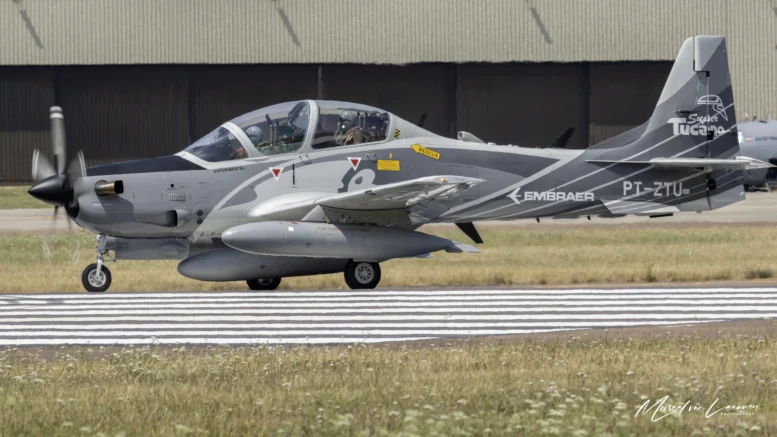
While the KC-390 Millennium is being compared directly to the American C-130J-30 for its tactical transport capabilities, the A-29 Super Tucano is gaining traction for a highly specialized role. Traditionally used for counter-insurgency, the Super Tucano is now being promoted as a cost-effective platform to intercept Shahed-class kamikaze UAVs. Utilizing its agility and low operating costs, the turboprop aircraft can effectively neutralize one-way attack drones, providing a vital layer of protection for Poland’s airspace without exhausting expensive surface-to-air missile stocks.
“Integrating a versatile platform like the Super Tucano allows for a more surgical and sustainable response to the proliferation of uncrewed systems,” noted a defense spokesperson familiar with the evaluation. “Strengthening our defensive perimeter requires innovative thinking and proven technology that can adapt to the challenges of the modern battlefield.”
As Poland continues to bolster its military readiness, the decision to opt for Brazilian-made platforms would represent a major diversification of its defense hardware. If a contract is finalized, it will underscore the growing importance of light-attack aircraft in modern electronic and drone warfare. International defense analysts are now waiting to see if Warsaw will officially open a formal tender to fulfill these specific operational requirements.
The evaluation of the A-29 and KC-390 highlights Poland’s commitment to a multi-layered and modernized defense infrastructure. By potentially adopting these systems, Warsaw aims to secure its borders against both conventional transport needs and the rising threat of loitering munitions.