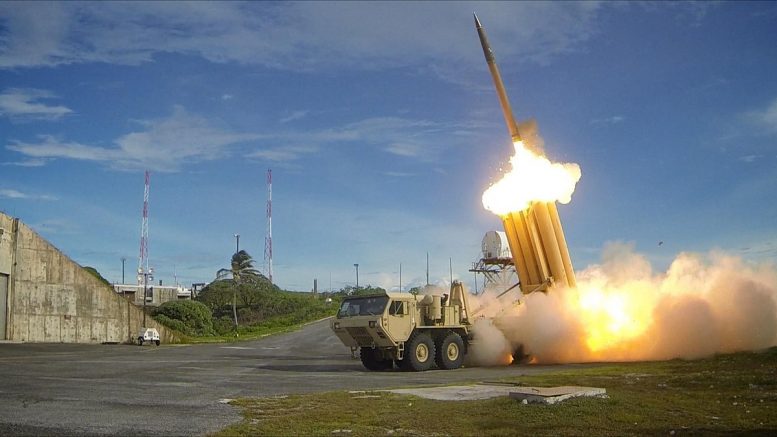
AviationNews – The U.S. Missile Defense Agency has awarded Lockheed Martin a $12.4 million contract modification to upgrade vital components of the Terminal High Altitude Area Defense (THAAD) system. This strategic investment aims to address hardware aging issues, ensuring the shield remains fully capable of intercepting incoming ballistic threats.
This specific award focuses on obsolescence mitigation, a critical process in defense lifecycle management designed to replace outdated technology with modern equivalents. The agreement extends the partnership between the agency and Lockheed Martin, the prime contractor, to maintain the readiness of the system’s hardware. By tackling these issues now, the military avoids potential supply chain disruptions and ensures that the THAAD batteries currently deployed globally remain operational and effective without requiring complete system replacements.
From a technical perspective, THAAD is a unique platform capable of intercepting ballistic missiles inside or outside the atmosphere during their final, or terminal, phase of flight. The contract modification ensures that the complex electronics and physical hardware driving this kinetic energy interceptor function seamlessly. Updating these components allows the system to maintain the high-speed processing and reliability required to track and destroy targets moving at hypersonic speeds.
The importance of maintaining such defense assets was highlighted by industry officials regarding the program’s continuous evolution. “Sustainment and modernization are just as critical as initial production,” noted a defense sector analyst regarding the announcement. “Addressing hardware obsolescence ensures that the warfighter has a reliable system that performs flawlessly when called upon to protect critical assets.”
Looking forward, this move underscores a broader commitment to fortifying national defense capabilities amidst a landscape of increasing proliferation of ballistic missile technology. By proactively updating existing infrastructure, the U.S. government ensures a layered defense strategy that can adapt to emerging threats while bridging the gap toward future defense innovations.
Lockheed Martin is set to execute these hardware updates to preserve the integrity of the nation’s ballistic missile defense architecture. This targeted investment guarantees that the THAAD system retains its operational edge, providing essential protection against evolving aerial dangers.