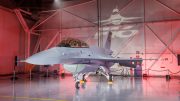
Few fighter jets in aviation history have had the global impact, operational longevity, and widespread adoption of the F-16 Fighting Falcon. First developed in the 1970s by General Dynamics (now Lockheed Martin), the F-16 has become one of the most prolific and effective combat aircraft in the world.
Origins and Development
Originally designed as a lightweight air superiority day fighter under the U.S. Air Force’s Lightweight Fighter Program, the F-16 quickly evolved into a highly versatile multirole platform. Its first flight took place in 1974, and it entered service in 1978. The aircraft was revolutionary for its time, introducing features such as:
- Fly-by-wire flight control systems
- Bubble canopy for superior visibility
- Side-stick controller
- Relaxed static stability for better agility
Key Specifications
- Length: 49.5 feet (15.06 meters)
- Wingspan: 32.8 feet (10.0 meters)
- Top Speed: Mach 2.05 (~1,320 mph / 2,124 km/h)
- Combat Radius: ~340 miles (550 km) on a hi-lo-hi mission with 4,000 lbs of bombs
- Service Ceiling: 50,000+ feet (15,240 meters)
- Armament: One M61 Vulcan 20mm cannon, up to 17,000 lbs (7,700 kg) of external ordnance
- Engine: Single Pratt & Whitney F100 or General Electric F110 turbofan
Global Reach and Popularity
As of 2025, over 4,600 F-16s have been produced, with over 25 countries operating the jet. Nations including the United States, Israel, Turkey, Egypt, Pakistan, South Korea, and more recently Bulgaria and Slovakia, have integrated the aircraft into their defense systems.
The latest variant, the F-16V “Viper,” includes modern radar (APG-83 AESA), upgraded mission computers, advanced electronic warfare systems, and compatibility with the latest precision-guided munitions.

Operational Success
The F-16 has participated in every major U.S. conflict since its introduction, from Operation Desert Storm to ongoing missions in Syria and Iraq. Its combination of cost-efficiency, agility, and combat capability has made it indispensable in both high- and low-intensity operations.
Some impressive stats:
- Over 19 million flight hours logged
- More than 400 air-to-air victories
- High sortie rate with low maintenance demands
- Unit cost (F-16V): ~$63 million (2024)
Why It’s a Success
- Affordability and Upgradeability: Unlike many 5th-gen fighters, the F-16 provides a balance between cost and performance. Continuous upgrades mean older airframes can still serve in modern battlespaces.
- Multirole Flexibility: The F-16 can perform air superiority, close air support, suppression of enemy air defenses (SEAD), reconnaissance, and precision strike—making it a one-jet-does-all solution.
- Global Interoperability: With common platforms across allied nations, training, logistics, and joint operations become significantly easier.
- Ease of Maintenance: Designed with maintainability in mind, the F-16’s modular systems and single-engine design reduce time and cost for repairs and inspections.
- Combat Proven: Time and again, the F-16 has proven itself across diverse theaters—from Middle Eastern deserts to Eastern European skies.
Looking Ahead
Even as 5th-generation fighters like the F-35 take center stage, the F-16 remains relevant. Lockheed Martin continues to produce new-build F-16Vs for export, and many air forces are integrating the jet into hybrid fleets with more advanced aircraft.
Conclusion
The F-16 Fighting Falcon represents the gold standard for multirole fighters. Its combination of performance, versatility, and affordability has made it a mainstay of global air power for nearly five decades. With ongoing upgrades and widespread adoption, the F-16’s legacy is far from over.